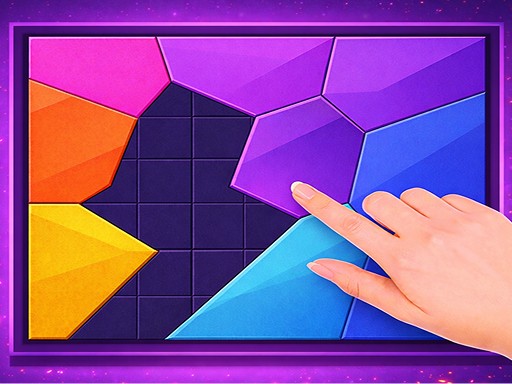
Let's be totally honest: the mobile puzzle market is flooded with games that ask you to do little more than mindlessly tap glowing jewels or match three identical candies in a row. It can get monotonous. However, every now and then, a game resurrects an ancient, deeply satisfying mechanical concept and polishes it to absolute perfection. Block Master: Polygonal Puzzle is exactly that kind of game. Rooted heavily in the centuries-old tradition of the "Tangram," this title strips away the flashy gimmicks and delivers a pure, unadulterated test of your spatial logic, geometric reasoning, and visual patience.
Your objective is straightforward: take a jumbled mess of scattered, brightly colored polygonal pieces and slot them perfectly into a predefined blank canvas. There can be zero overlapping edges, and you cannot leave a single millimeter of empty space. While the premise is simple enough for a child to grasp, the execution in the later stages will make even seasoned puzzle veterans sweat. If you’ve hit a brick wall on the complex 14-piece boards, you aren't alone. In this massive, expert-level strategy guide, we are going to dissect the difficulty curve, teach you advanced shape placement techniques, and show you exactly how to manage your in-game economy so you never run out of hints when you actually need them.
Phase 1: Navigating the Difficulty Curve
Block Master doesn't just throw you to the wolves; it utilizes a brilliant, staggered progression system. The difficulty of any given level is directly tied to the number of puzzle pieces you have to manage.
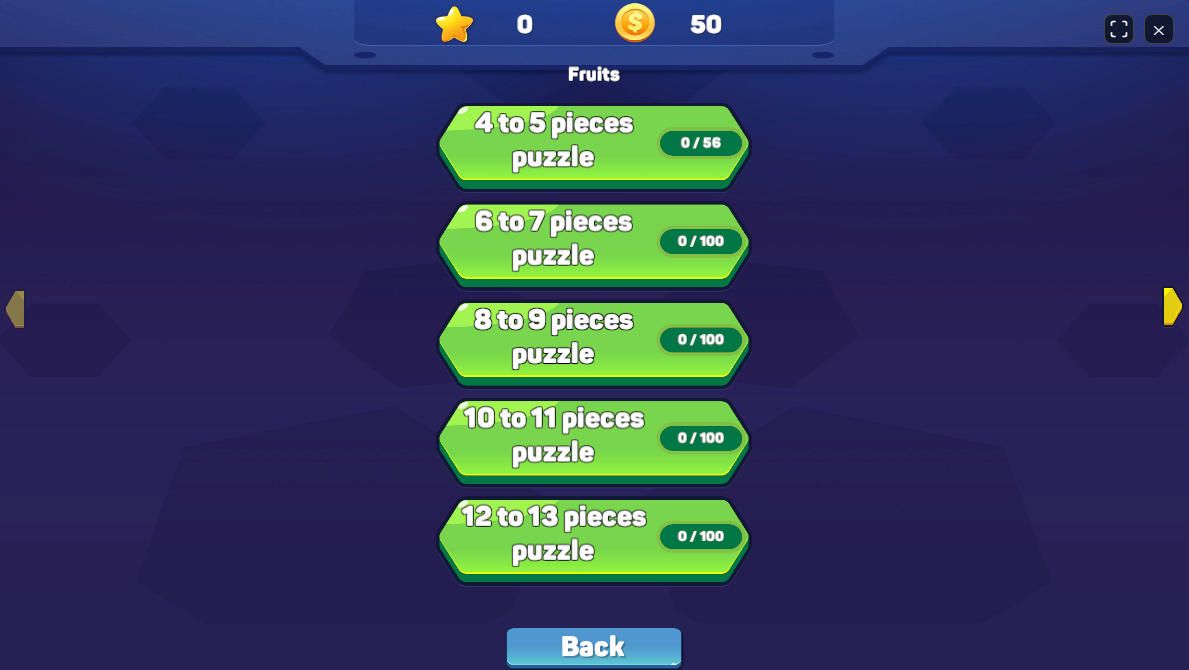
The game is neatly divided into specific tier brackets: you start with the breezy 4-5 pieces and 6-7 pieces, which serve as your mental warm-up. These early levels teach your brain to recognize basic geometric relationships, like how two right-angled triangles can form a perfect square. But as you progress through the 8-9 and 10-11 piece brackets, the shapes become increasingly erratic. You'll stop seeing standard squares and start dealing with jagged, irregular polygons that look like broken glass. By the time you reach the hybrid brackets like 8-12 pieces or the ultimate 10-14 piece gauntlets, the board transforms from a fun distraction into a serious cognitive workout.
When you drag a piece from the staging area onto the board, you have to be meticulous. Unlike some casual drag-and-drops that "magnetize" pieces into the wrong spot, Block Master requires strict edge-to-edge alignment. If a piece refuses to sit flush, don't force it. The game engine is telling you that while the angle might look right, the length of the edge is mathematically incompatible with the adjacent block. Move it back to the tray and rethink the layout.
Phase 2: The Art of the Setup (Getting Started)
When a level first loads, you are presented with a stark white silhouette (the board) and your colorful arsenal of pieces waiting below in the placement area.
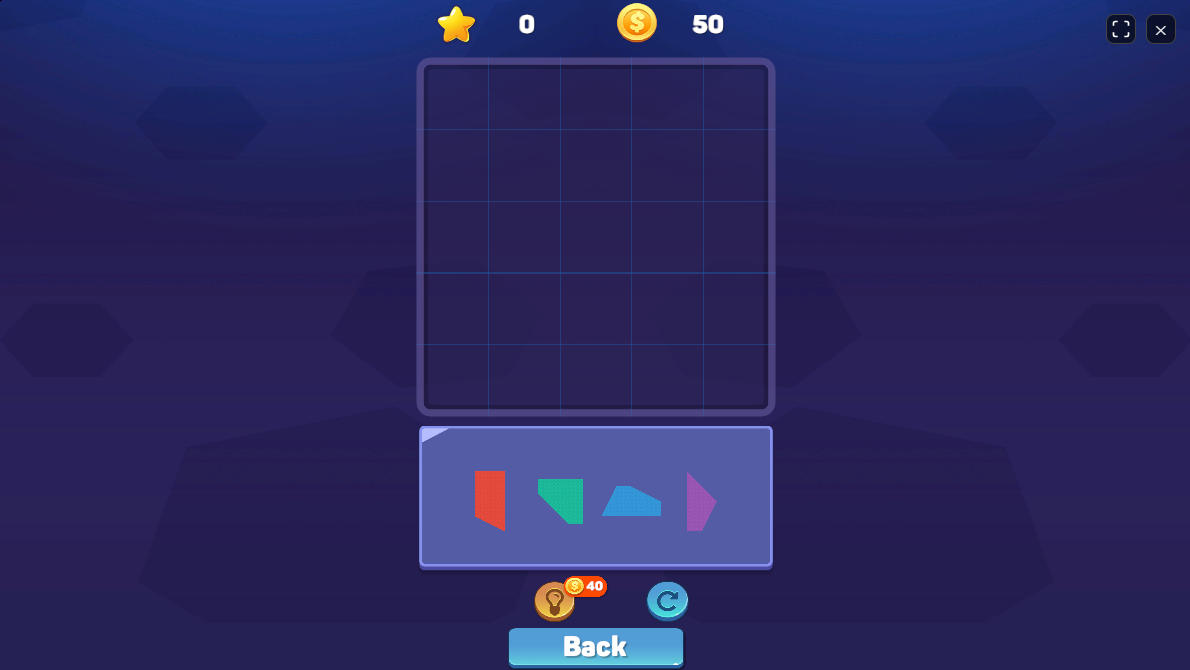
Your immediate instinct might be to grab the biggest piece and just slap it dead in the center of the board. Do not do this. The center of the board is your flexible zone; it's the area that can accommodate the highest variety of shapes. Placing a massive, awkward polygon in the middle instantly divides your board into smaller, jagged sub-sections, heavily restricting where your remaining pieces can go.
Instead, employ the Perimeter-First Strategy. Look at the outer edges of the white silhouette. Does the board have a sharp 90-degree corner? Scan your tray for a piece that has a matching 90-degree right angle and slot it into that corner. Does the board have a long, perfectly straight vertical edge? Find your longest, flattest piece and align it flush against that wall. By building from the outside in, you gradually shrink the overall size of the puzzle while maintaining a clean, manageable working area in the center.
Gameplay Walkthrough: Geometry in Motion
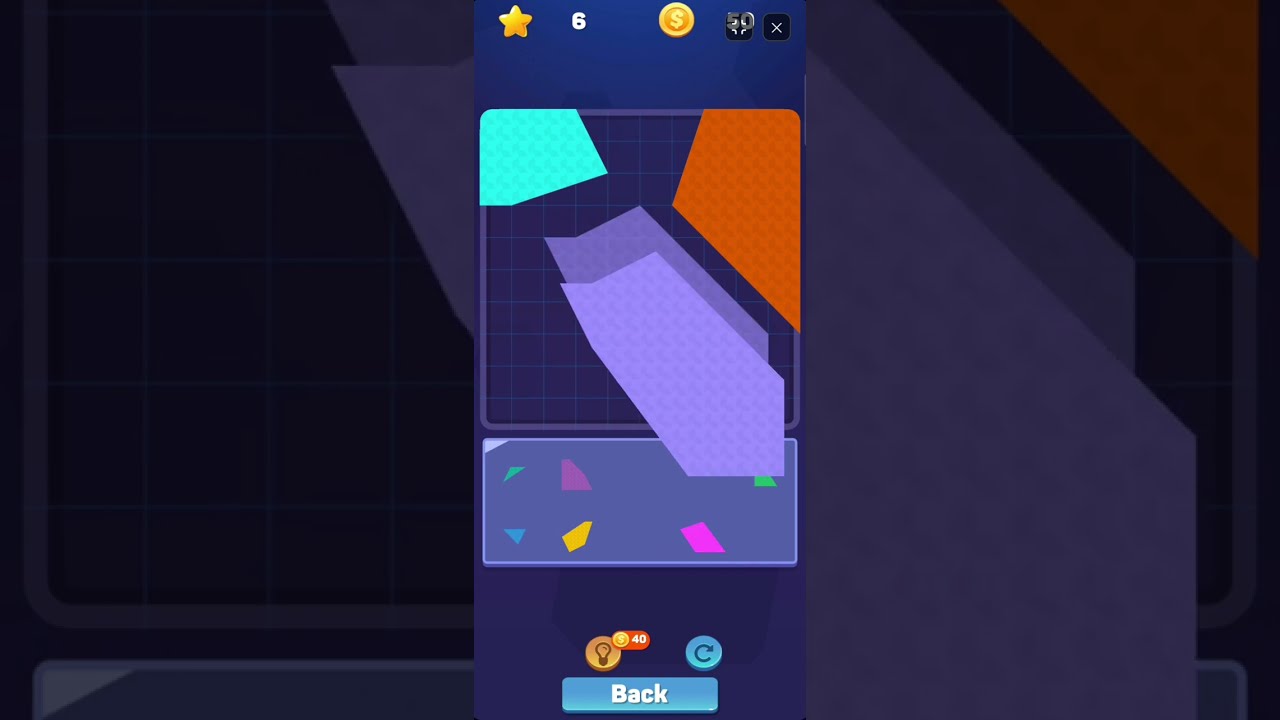
Reading about spatial reasoning is one thing, but watching a board come together piece by piece is vital for training your eyes. Check out the gameplay demonstration below. Pay close attention to how the player tests pieces against the perimeter walls, and how they utilize the hint system when the remaining gaps become too visually confusing to parse.
Phase 3: Advanced Tactics for High-Piece Boards
When you cross into the 10+ piece territories, the standard Perimeter-First strategy isn't always enough to secure a quick victory. You need to start analyzing the negative space.
Hunt the "Oddballs"
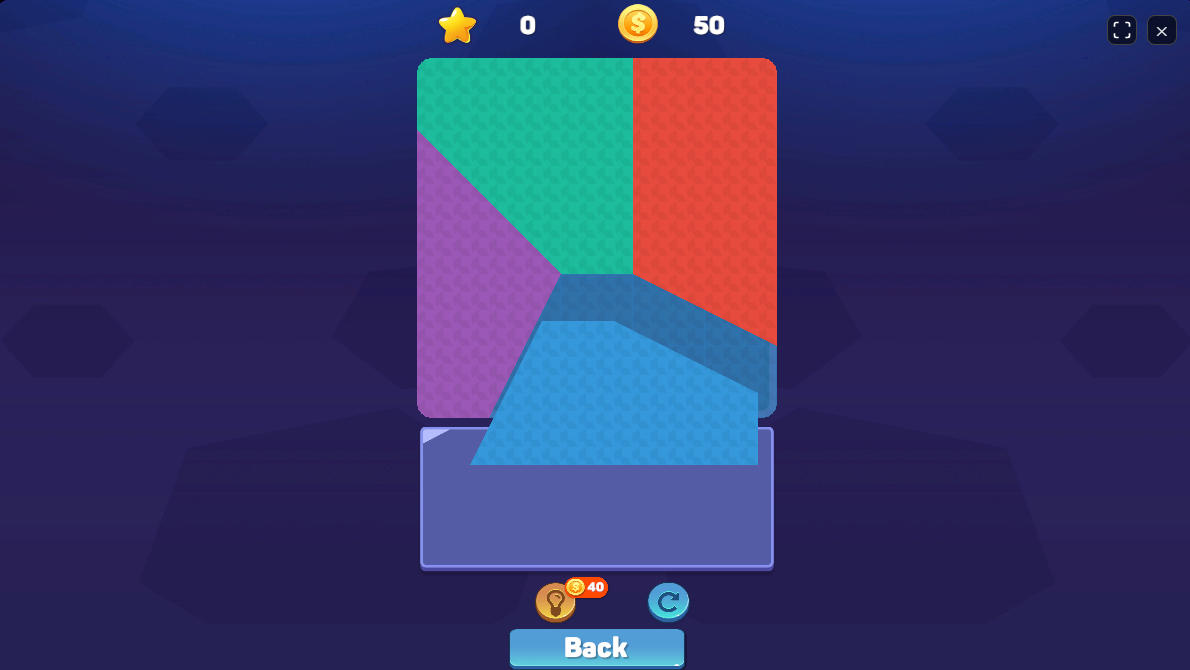
Every complex level has one or two pieces that look absolutely ridiculous—a shape with deep jagged cutouts, a strange zigzag, or a bizarre trapezoid. These "Oddballs" are actually your best friends. Because their shapes are so hyper-specific, there are usually only one or two places on the entire board where they can possibly fit. Don't save the weird pieces for last; place them early! Once you anchor an oddball piece successfully, its unique edges will create perfect, easily recognizable slots for your more generic triangular or rectangular pieces.
The Shuffle Technique
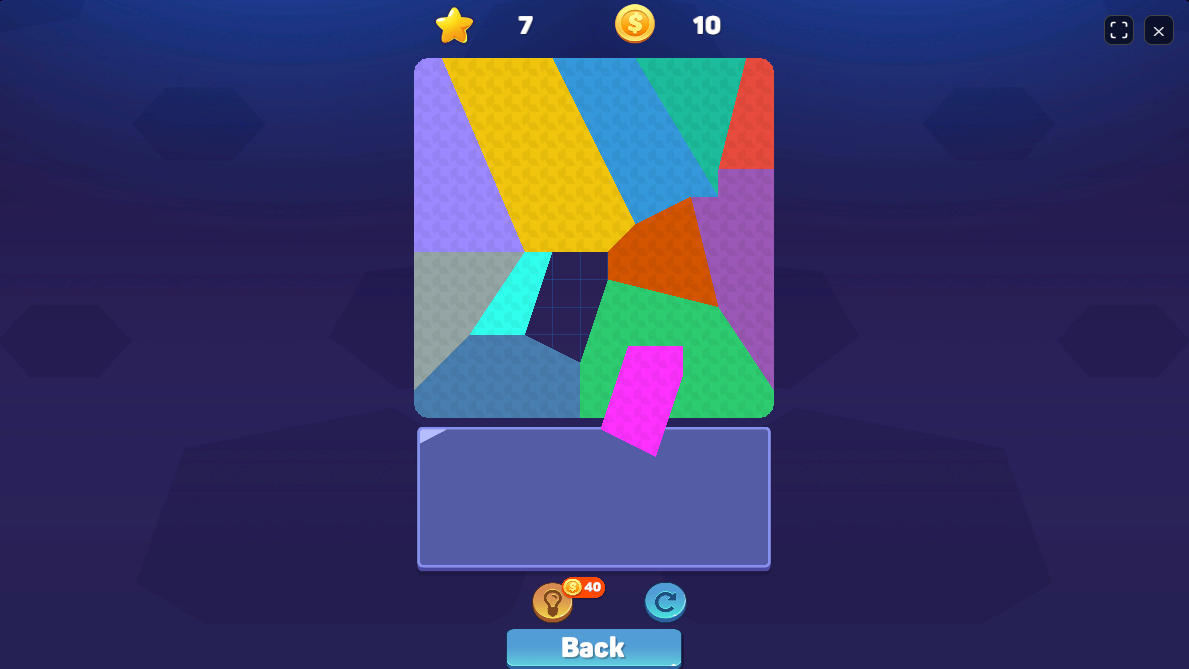
If you have three pieces left and they simply aren't fitting into the remaining gap, you have likely made a structural error earlier in the build. Don't pull every single piece off the board and start from scratch. Pull out just the last 3 or 4 pieces you placed. Often, you just need to swap two similarly shaped triangles to fix a millimeter-wide misalignment that is throwing off the rest of the board.
Phase 4: Managing the Hint Economy
No matter how sharp your spatial logic is, eventually, your brain will experience "shape fatigue." You'll stare at the screen for five minutes, completely unable to visualize the solution. This is where the game's Hint System becomes a crucial lifeline.
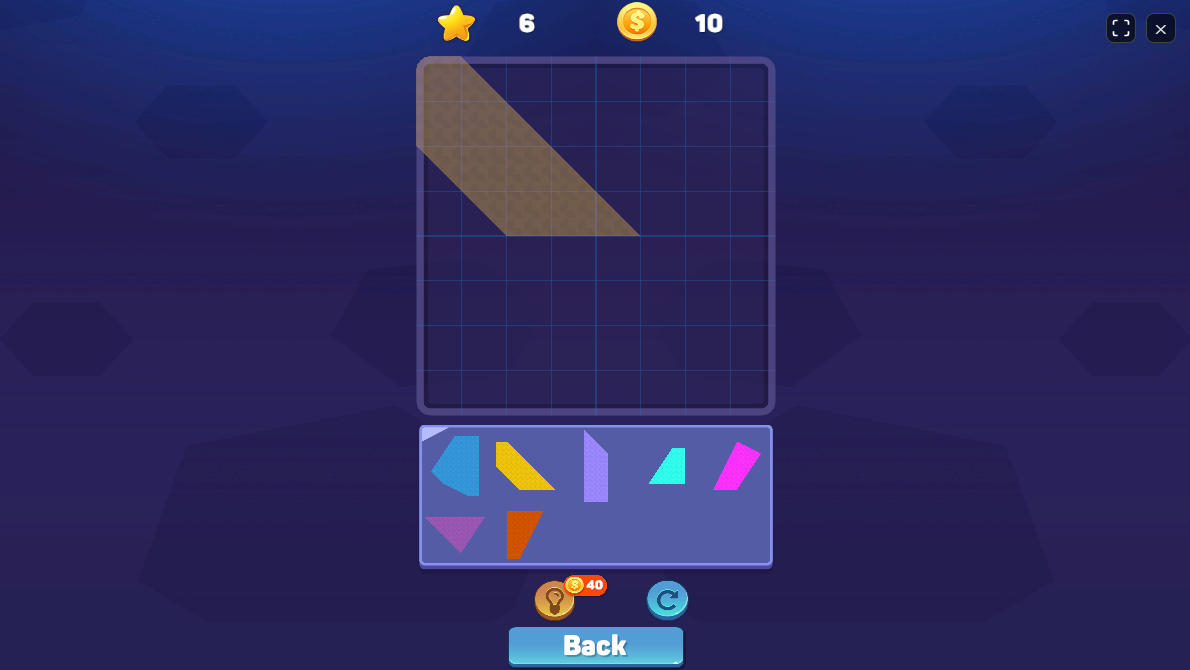
When activated, a Hint instantly projects an outline onto the board, showing you the exact, correct location for a specific puzzle piece. However, hints are not free. They cost 40 coins per use. You earn these coins organically by successfully grinding through challenges, or by opting to watch a short advertisement.
The Golden Rule of Hints: Never, ever burn your coins on a puzzle with fewer than 8 pieces. You can easily brute-force a 6-piece puzzle just by dragging and testing every combination. You must fiercely hoard your coins for the late-game 12-14 piece bloodbaths. If you enter a massive puzzle and feel entirely overwhelmed, popping a single hint early on to anchor one difficult piece is usually enough to unravel the rest of the board naturally. Treat your coins like a premium resource, and you will never find yourself hardstuck and broke.
Final Thoughts: A satisfying Mental Workout
Block Master: Polygonal Puzzle is an incredibly elegant, visually soothing game that completely respects the player's intelligence. It requires patience, careful observation, and a willingness to look at shapes from multiple different angles. By sticking to the perimeter, prioritizing oddball pieces, and fiercely managing your coin economy for clutch hints, you will slice through these tangram boards with absolute precision. Give your brain the workout it deserves, and go master those blocks!