The beauty of arcade puzzle games lies in their ability to strip away complex narratives and drop you straight into pure, unadulterated gameplay. Brick Challenge executes this design philosophy flawlessly. It takes the deeply familiar, highly satisfying concept of block-falling elimination mechanics—reminiscent of genre giants like Tetris or classic Match-3s—and injects it with a massive shot of adrenaline. You aren't simply matching shapes in a relaxed, turn-based environment; you are fighting a relentless, unforgiving clock that is constantly threatening to end your run.
If you find yourself freezing up as the timer dips into the red, frantically sliding blocks into the wrong columns, and repeatedly failing to shatter your personal high score, you need a fundamental shift in your approach. This isn't just a game of fast thumbs; it's a test of rapid color recognition and strategic targeting. In this massive, 1,000+ word expert strategy guide, we are going to completely deconstruct the mechanics of Brick Challenge. From mastering the lateral slide technique to identifying and weaponizing the crucial time-delay indicators, we will equip you with the elite tactics necessary to keep the clock ticking and the board clearing.
Phase 1: The Core Mechanics of Alignment and Elimination
The foundation of Brick Challenge is its remarkably fluid sliding mechanic. At any given moment, you are put in control of a single, highly mobile colored block positioned at the top of the vertical grid. Beneath your active block lies a vibrant, ever-changing landscape of static, multi-colored bricks stacked in various columns.
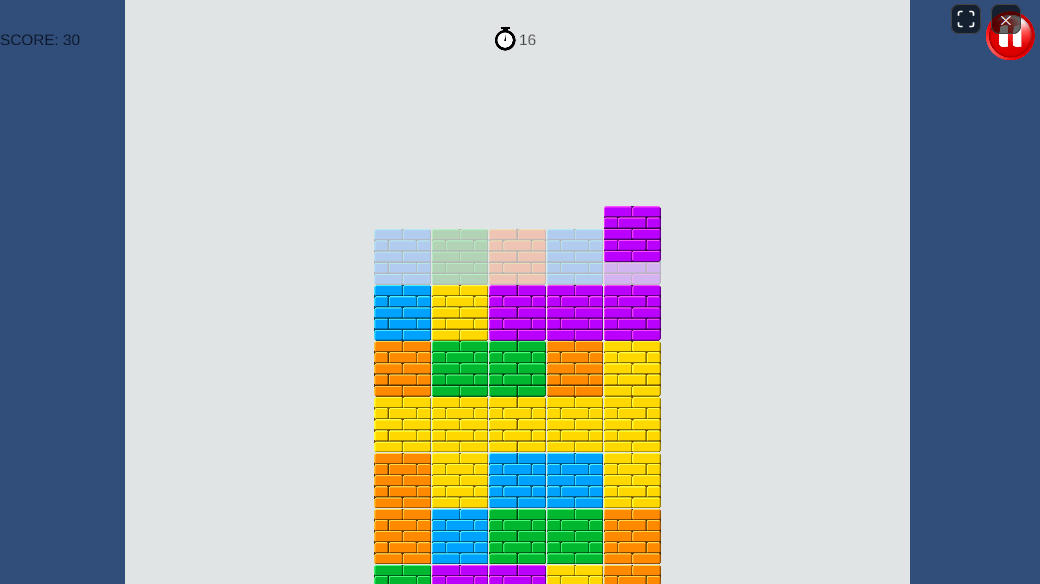
Your objective is crystal clear: observe the specific color of your current active top block, swiftly slide it horizontally across the upper axis, and align it perfectly above a column that contains an exposed block of the exact same color. Once aligned, you execute the drop. When your descending block impacts and overlaps with its identical counterpart, both blocks are instantly vaporized from the board. As soon as the elimination triggers, the game randomly generates a brand-new colored block at the top, and the high-speed cycle resets.
Novice players tend to wait for their dropped block to completely finish its elimination animation before they start moving the next block. In Brick Challenge, this hesitation is a death sentence. The game engine allows for rapid-fire inputs. The absolute millisecond you commit to dropping a block, your eyes should already be scanning the board for the next color match. You must train your brain to act one step ahead of the on-screen animations.
Phase 2: The Psychological Battle Against the Clock
In many puzzle games, the grid filling up to the top is what kills you. In Brick Challenge, the true, ever-present antagonist is the countdown timer. The game gives you a strictly limited window to achieve as many eliminations as humanly possible. As the seconds tick away, the psychological pressure mounts, leading to what competitive gamers call "tunnel vision."
When panic sets in, players stop looking at the whole board and focus only on the block they are currently holding. This leads to frantic, inaccurate swiping, dropping a blue block onto a red column, which not only fails to eliminate the target but also creates a temporary physical barrier that messes up your future alignments. You must consciously force yourself to stay calm. Smooth, deliberate, and accurate drops are infinitely faster and more rewarding than panicked, messy swiping.
Phase 3: The Ultimate Lifeline — Time Delay Indicators
If the game only gave you a static 60 seconds, achieving massive high scores would be mathematically impossible. The developers understood this and implemented the single most important strategic element in the entire game: Time Delay Indicators.
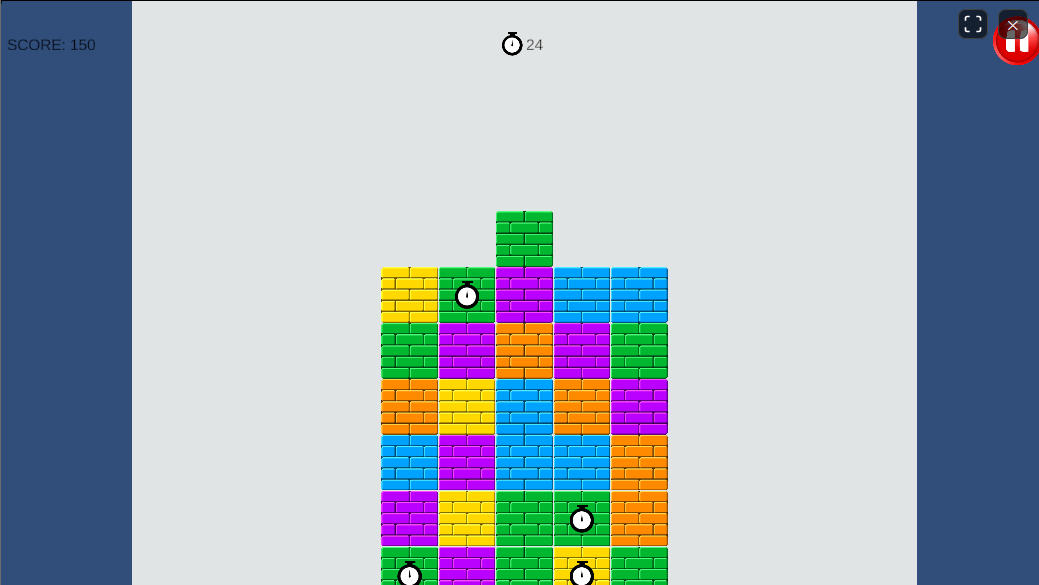
As the board populates with new blocks, you will frequently notice specific bricks marked with special clock or delay icons. These are not just decorative; they are your absolute lifeline. When you successfully align and eliminate a block that features a time delay indicator, the game rewards you by physically adding precious seconds back onto your master countdown clock.
The Target Prioritization Rule: If you are holding a green block, and you have a choice between eliminating a standard green block on the far left, or a green block with a time-delay indicator on the far right, you must prioritize the indicator block. Period. Even if it takes a fraction of a second longer to slide your finger to that column, the net positive gain in time is the only way to extend your run. Top-tier players don't just clear colors; they systematically hunt down time extensions to keep themselves alive indefinitely.
Gameplay Walkthrough: Watch the Flow State in Action
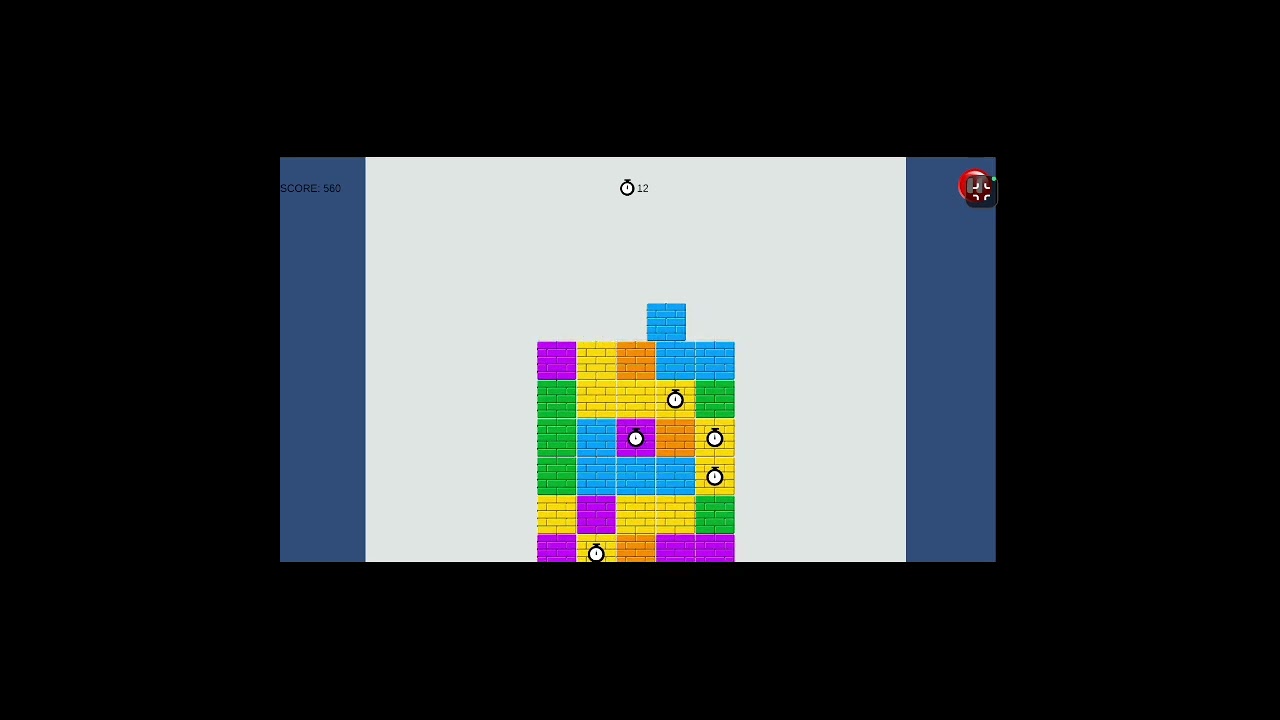
Theoretical knowledge is vital, but seeing the high-speed execution of these concepts is the fastest way to improve your own mechanics. Watch the gameplay demonstration below. Pay close attention to the player's rhythm. Notice how they don't stutter between drops, and observe how aggressively they prioritize clearing the columns that contain the crucial time-delay items.
Phase 4: Elite Tactics for Shattering High Scores
Once you understand the basic mechanics and the importance of time extensions, you need to refine your physical execution. Here are the advanced techniques that separate average players from leaderboard dominators:
1. The Power of Peripheral Vision
Do not stare directly at your active top block. You already know what color it is the millisecond it spawns. Instead, keep your focal point dead center on the main grid of static blocks. Use your peripheral vision to track the lateral movement of your active block at the top. By keeping your eyes on the "target zone" rather than the "weapon," you drastically reduce the cognitive delay between identifying a match and executing the drop.
2. Rhythmic Tapping Over Frenzied Swiping
Brick Challenge is as much a rhythm game as it is a puzzle game. If you watch professionals play, their finger movements are economical and metronomic. Find a tempo. *Slide, Drop. Slide, Drop.* Do not break your internal rhythm even if a highly desirable time-delay block spawns on the opposite side of the screen. Smooth, continuous momentum will always outpace erratic, jerky movements.
3. Board Management and Depth Control
While the game doesn't punish you instantly for a mis-drop, stacking too many mismatched colors creates towering, uneven columns. This is incredibly dangerous because a tall column blocks the physical travel path of your dropping brick, sometimes causing it to lock into place prematurely. If you accidentally mis-drop, your immediate priority should be to aggressively clear that specific column to level out the playing field. A flat, horizontal board state gives you the maximum amount of reaction time for your drops.
Final Verdict: The Need for Speed
Brick Challenge is a masterclass in hyper-casual game design, taking a simple color-matching premise and elevating it with intense time-management pressure. By training your peripheral vision, maintaining a calm but rapid rhythm, and fiercely prioritizing every single time-delay indicator that spawns on the grid, you will transform your gameplay. Stop panicking about the ticking clock, and start controlling it. Jump into the grid, line up your colors, and see how long you can survive the drop!