If you take a look at the current landscape of mobile and browser gaming, you will notice a massive trend dominating the charts: hyper-casual arcade games. These are games designed with a single, universally understood mechanic that takes exactly three seconds to learn, but potentially hundreds of hours to truly master. At the absolute pinnacle of this genre stands Build a Tower. It strips away complex narratives, complicated skill trees, and distracting power-ups, leaving you with one pure objective: stack the blocks as high as humanly possible.
But do not let the minimalist design deceive you. Beneath the colorful, sliding blocks lies an incredibly unforgiving physics engine that ruthlessly punishes bad timing. In this comprehensive, 1000+ word deep dive, we are going to tear down the mechanics of "Build a Tower." We will explore the psychology of the slicing penalty, the visual tricks needed to handle extreme speeds, and the specific rhythmic techniques used by high-score record holders. Let’s start stacking!
Phase 1: The Core Mechanic and the Slicing Penalty
The premise is remarkably straightforward. You begin with a solid base block. A new colored block slides horizontally across the screen, moving back and forth over your foundation. Your only control is a simple screen tap (or mouse click). When you tap, the sliding block instantly drops onto the layer below it.
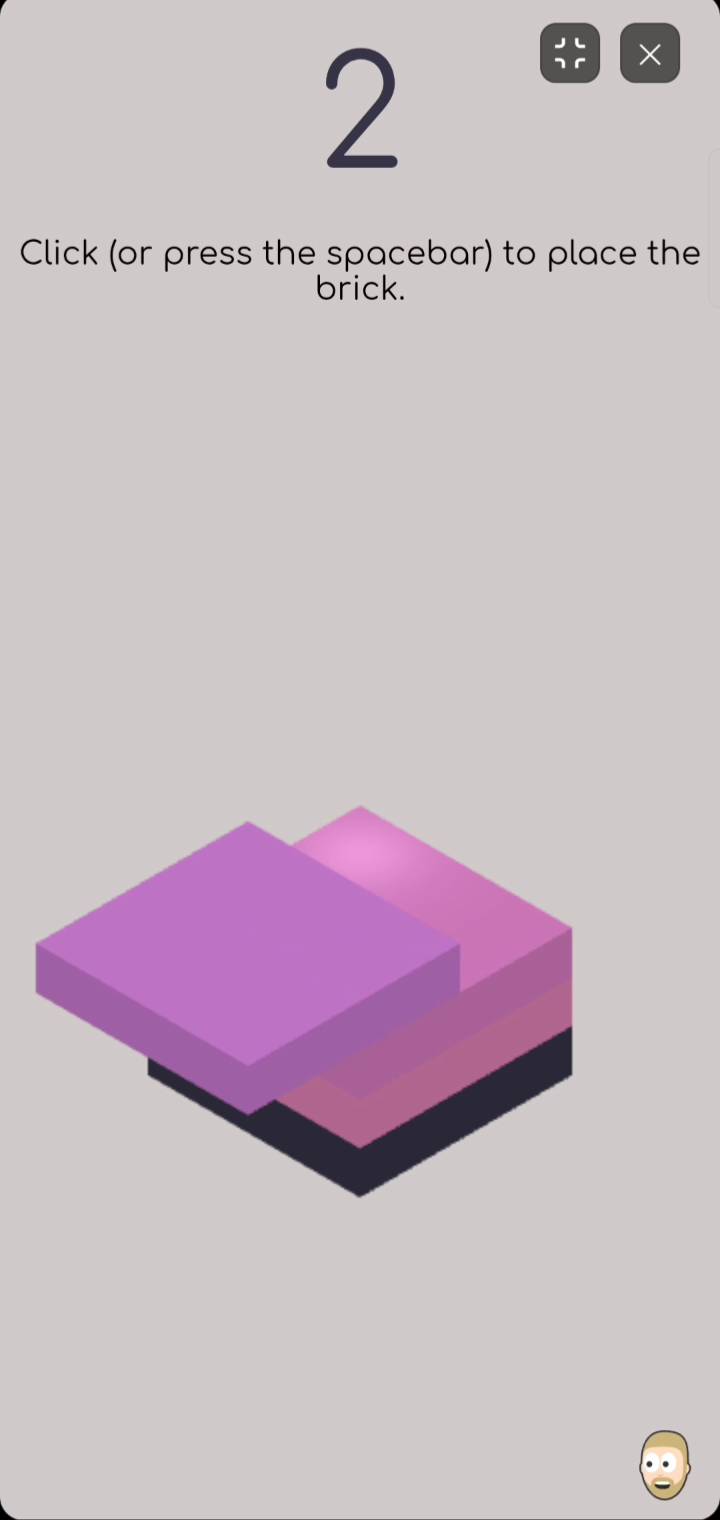
If your timing is absolutely flawless, the new block lands perfectly flush with the block beneath it. You hear a satisfying musical chime, and the block retains 100% of its original width. However, human reflexes are rarely perfect. If you tap slightly too early or too late, the block will overhang the edge of the foundation.
This is where the infamous Slicing Penalty occurs. The game ruthlessly chops off whatever portion of your block is hanging over the edge, causing it to fall away into the abyss. Now, your platform is narrower. The next block that slides in will automatically shrink to match this new, smaller width. This creates a brutal cascading effect: one bad drop makes the next drop significantly harder, and the margin for error shrinks exponentially.
Amateur players tend to focus their eyes on the moving edges of the incoming block, trying to align the left or right side. This is a massive mistake. Your eyes cannot track the edges accurately as the speed increases. Instead, focus entirely on the dead center of the stationary block below. Wait for the exact middle of the sliding block to cross your focal point.
Phase 2: The Speed Trap and Rhythmic Tapping
Build a Tower is an endless survival game. There are no levels to complete or bosses to defeat. Your only opponent is velocity. As your tower grows taller, the background color shifts to indicate your progression into the stratosphere, and more importantly, the sliding speed of the blocks increases.
Around the 30-block mark, the speed crosses a threshold where conscious, reactive thought is no longer fast enough. If you wait to "see" the block align before you tap, the input delay between your brain and your finger will cause you to drop it late. To survive the mid-to-late game, you must transition from visual reaction to rhythmic anticipation.
Treat the sliding block like a metronome. It swings left, it swings right. Tap your foot or nod your head to the exact moment it hits the center. You aren't tapping based on what you see; you are tapping based on the rhythm you have established in your head.
Gameplay Walkthrough: The Zenith Challenge
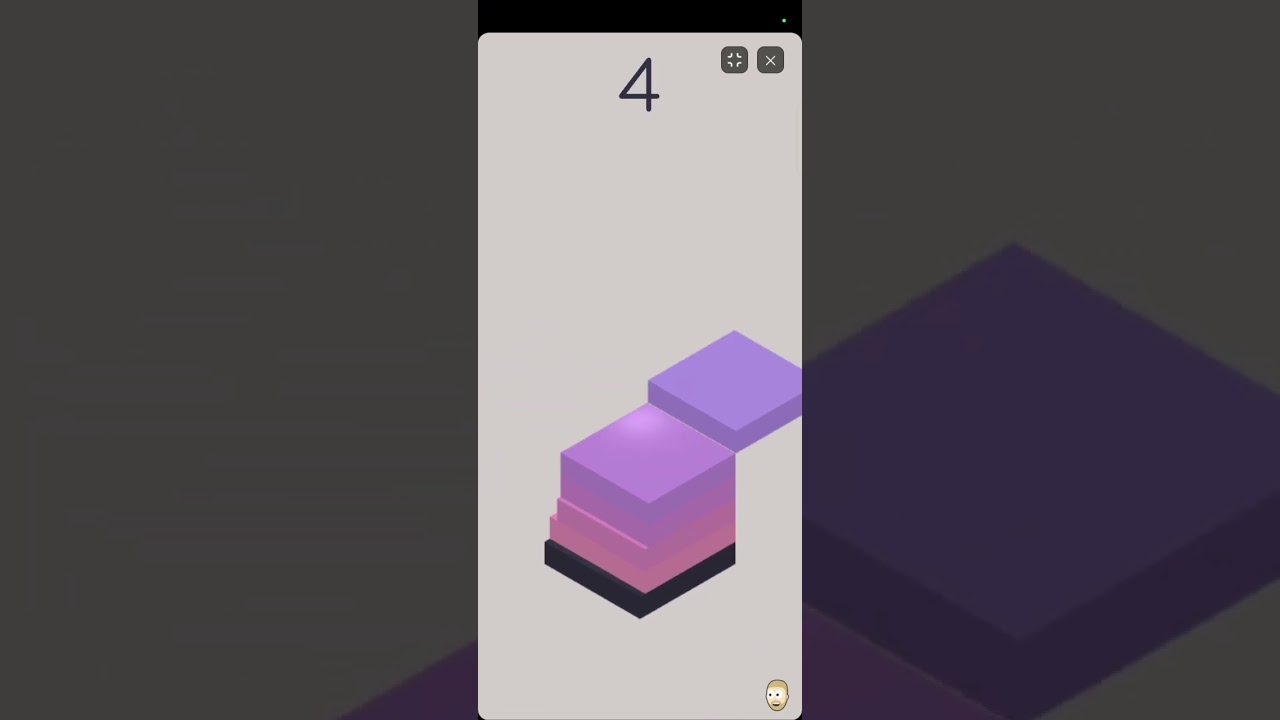
Reading about rhythm is helpful, but watching a high-level player execute it is essential. Check out this video demonstration. Pay close attention to the visual feedback when a "Perfect" drop is achieved, and notice how the player manages to stabilize their rhythm even when the blocks are moving at blinding speeds.
Phase 3: Survival at Extreme Altitudes (The Micro-Block)
Inevitably, no matter how good your rhythm is, you will miss a perfect alignment. You will get sliced. Then you might get sliced again. Suddenly, you are at layer 65, the blocks are flying across the screen at warp speed, and your target platform is no wider than a sliver of glass.
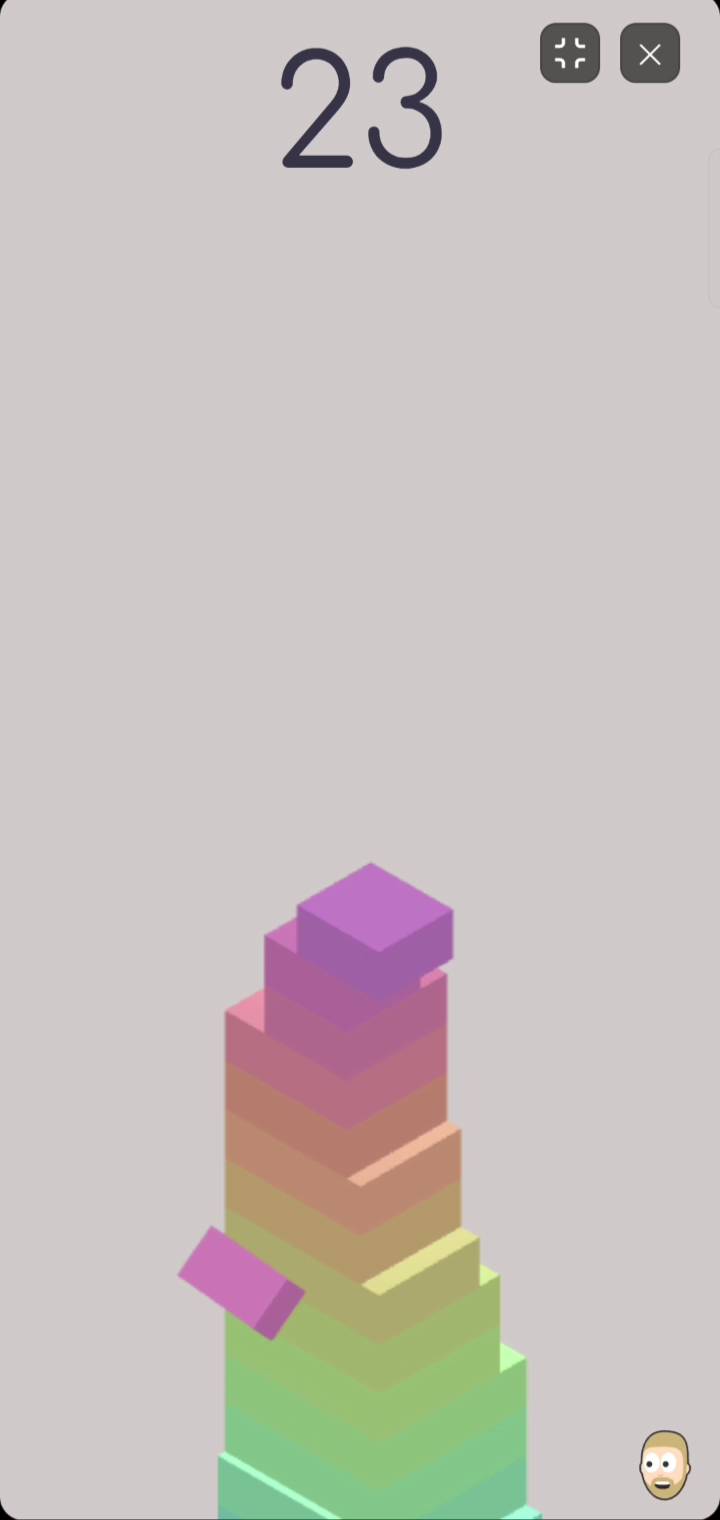
When you reach the "Micro-Block" phase, panic sets in. Most players freeze up, overthink their next move, and instantly fail. Here is how you survive and potentially recover:
- Embrace the Wall Bounce: The block moves side to side, bouncing off the invisible edges of the screen. At extreme speeds, do not try to catch the block in the middle of its swing. It's moving too fast. Instead, wait for it to hit the wall and reverse direction. At the exact moment it changes direction, its velocity drops to zero for a fraction of a millisecond. Use that micro-pause to calculate your tap timing.
- The Perfect Streak Recovery: Many games in this specific hyper-casual subgenre feature a hidden recovery mechanic. If your block is tiny, but you manage to land 5 to 10 absolutely perfect dead-center drops in a row, the game will reward you by slightly expanding the width of your block. Treat every drop like it's your first.
- Turn Off Distractions: If you are playing on your phone, turn on Do Not Disturb. A single notification banner dropping down will break your concentration and ruin a 100+ block run instantly.
Final Thoughts on the Stacking Phenomenon
Build a Tower is the ultimate test of focus, muscle memory, and psychological resilience. It strips away all the padding of modern gaming and forces you to confront your own reaction times. By shifting your visual focus to the center of the block, establishing an internal rhythm to beat the high-speed traps, and keeping a cool head when your platform shrinks to a sliver, you will shatter your personal records and climb higher than you ever thought possible. Now, take a deep breath, watch the swinging block, and tap to build!