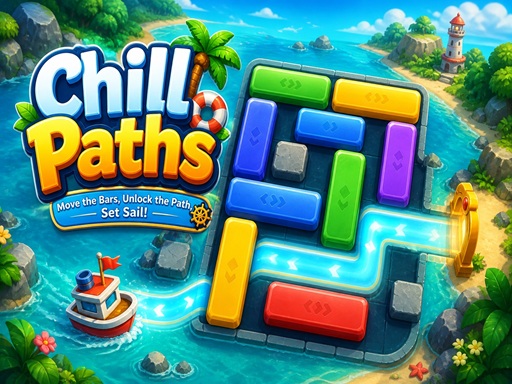
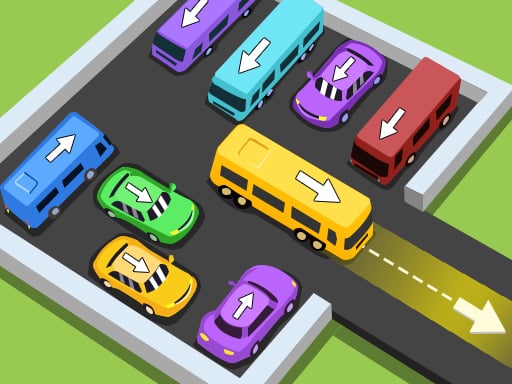
In the vast world of digital brain teasers, the "Sliding Block" genre—rooted in the classic Klotski or Unblock Me formula—remains an absolute pillar of intellectual gaming. It doesn't rely on twitch reflexes or complex leveling systems; instead, it offers a pure test of your brain's ability to manipulate 2D space. ChillPaths is a refined, modern iteration of this classic. Set against a tranquil maritime backdrop, the game tasks you with navigating a stranded boat through a gridlock of floating wooden barriers. Your goal? Clear the path and sail into the open ocean.
While the initial levels might feel breezy, ChillPaths quickly ramps up the difficulty, presenting you with dense, interlocking obstacle clusters that seem impossible to move. Many players find themselves caught in "infinite loops," sliding the same blocks back and forth without making any real progress. To truly master this harbor, you need to abandon trial-and-error and adopt a professional solver's mindset. In this massive, 1,000+ word strategy breakdown, we will deconstruct the game’s core physics, introduce the "Reverse Engineering" method, and teach you how to manage your most valuable resource: **empty space**.
Phase 1: Understanding Axial Constraints
The fundamental difficulty of ChillPaths lies in its rigid physics. Each obstacle in the harbor is a floating long-block that is governed by the Axial Movement Rule. Blocks can only slide along their longest axis. A horizontally oriented block can only move left and right; a vertically oriented block can only move up and down. They cannot rotate, and they cannot "jump" over other blocks.
Your target boat is typically restricted to a single horizontal line leading to the exit. This creates a spatial bottleneck. To get the boat through, you must physically displace every vertical block that crosses its path and every horizontal block that sits in its way. Because space is limited by the edges of the screen, moving one block often requires moving three others first, creating a complex chain of dependencies.
Novice players often see an empty spot and immediately slide the nearest block into it just to "clear a path." This is a fatal tactical error. In ChillPaths, empty space is your inventory. If you fill a gap with a block that doesn't help the boat move, you have essentially deleted that space from the board, often leading to a deadlock where nothing else can move.
Phase 2: The Power of Reverse Engineering
When faced with a gridlock that occupies 80% of the screen, looking at the boat (the start) can be overwhelming. Instead, professional puzzle solvers look at the Exit (the end). This is the "Reverse Engineering" method.
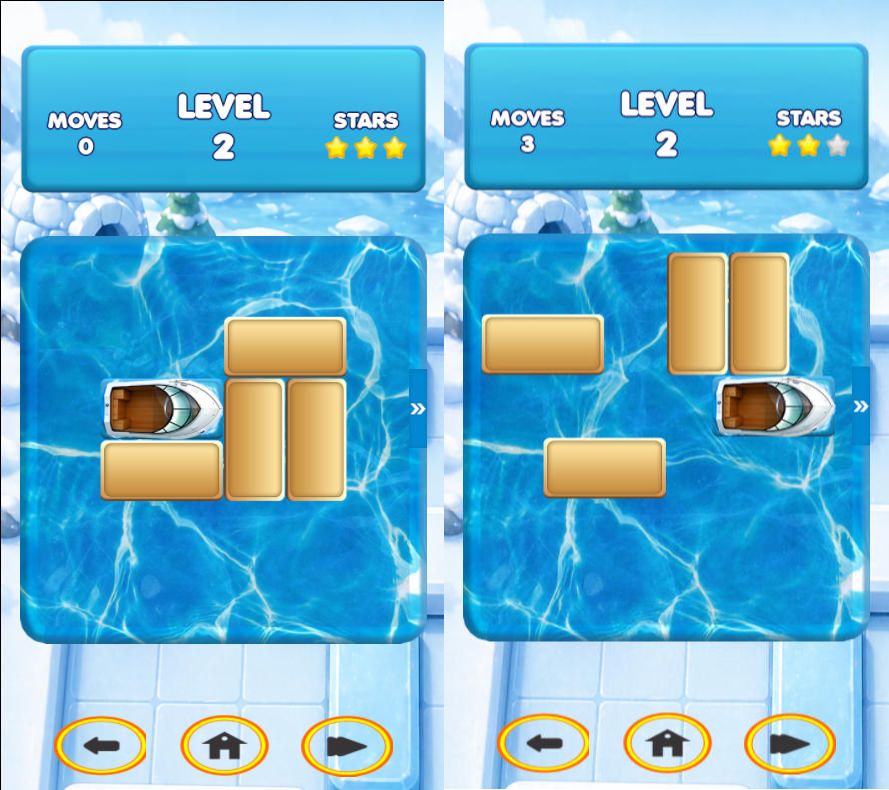
Follow this logic to break any level:
1. **Identify the Primary Obstacle:** What is the specific block currently touching the exit gate?
2. **Trace the Blockade:** To move that primary obstacle, which direction does it need to go? If it’s vertical and needs to slide down, what is sitting underneath it?
3. **Identify the Secondary Obstacle:** Whatever is underneath it is now your new target. Repeat the question: What needs to move to get this block out of the way?
By tracing the blockade backward from the exit to the first movable piece, you find the "Master Key." Moving this specific piece—which might be in a far corner of the map—will trigger a domino effect that eventually clears the exit. Don't play to move the boat; play to clear the exit.
Watch the Harbor Master in Action
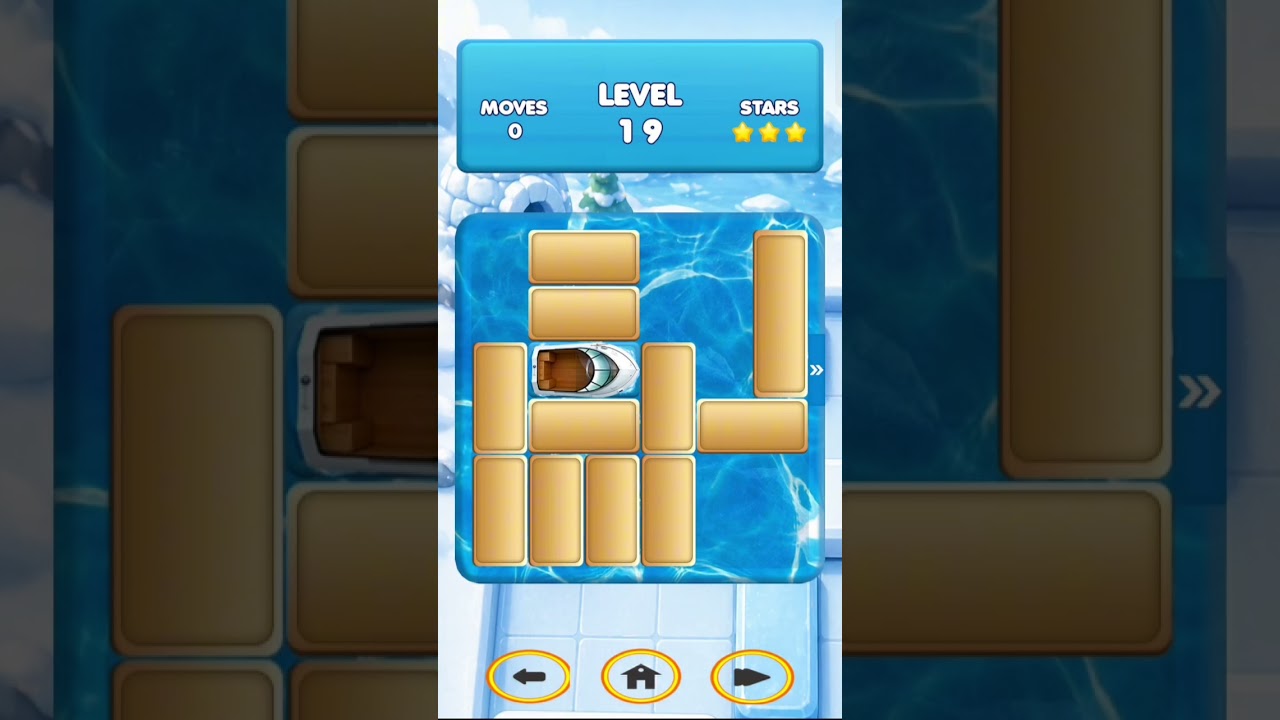
Theoretical logic is vital, but seeing the "Chain Reaction" in real-time is the best way to train your spatial intuition. Watch the demonstration below to see how a high-level player creates "pockets" of space to shuffle blocks around, eventually opening a clean lane for the boat. Notice the deliberate pause before movements—that is the player mentally calculating the reverse-engineering path.
Phase 3: Breaking Infinite Loops and Deadlocks
The most frustrating experience in ChillPaths is the "Cycle Trap." This occurs when you move Block A to move Block B, but moving Block B forces you to move Block A back to its original position. You are effectively walking in circles.
How to Break the Cycle:
When you find yourself in a Cycle Trap, it means your current "Space Pocket" is too small to accommodate the rotation of blocks. You must look elsewhere on the board. Often, there is a small 1x2 block or a single vertical plank on the far opposite side of the screen that is "locking" the rest of the board. By shifting these distal blocks, you can create a Buffer Zone. A Buffer Zone is a temporary storage space where you can park a horizontal block while the vertical blocks shuffle past each other. Once the shuffle is complete, you pull the parked block back out. Mastering this "parking" maneuver is the difference between a casual player and a pro.
Conclusion: Finding Your Chill
Despite its challenges, the beauty of ChillPaths lies in its name. There is no ticking clock, no penalty for wrong moves, and no high-score pressure. It is a game of meditative logic. By applying the "Reverse Engineering" method and respecting the sanctity of empty space, you turn a frustrating traffic jam into a satisfying spatial dance. Take your time, analyze the harbor, and guide your boat to the horizon. The open ocean is waiting!