There is a deeply satisfying, almost therapeutic joy in organizing a messy closet. Taking a chaotic jumble of items and neatly aligning them into perfect rows triggers a powerful psychological reward. Goods Triple Sort taps directly into that universal feeling, but dials up the intensity by fusing it with the rapid-fire logic of a match-3 puzzle and the relentless pressure of a countdown timer. This isn't just about making shelves look pretty; it's a high-stakes logistical challenge that will test your spatial awareness and forward-planning skills to their absolute limits.
If you're breezing through the early grocery store levels but finding yourself completely hardstuck when the game introduces multi-layered cabinets and punishing time constraints, you need a paradigm shift in your approach. Swapping items randomly until you stumble upon a match is a rookie trap that will inevitably lead to a "Time's Up" screen. In this massive, 1,000+ word expert strategy breakdown, we are going to tear open the underlying mechanics of Goods Triple Sort. From mastering the critical "Transfer Grid" technique to performing surgical layer peels and flawlessly timing your power-ups, we will give you the blueprint to conquer even the most cluttered superstore shelves.
Phase 1: The Core Mechanics – Layers and Limitations
The visual presentation of Goods Triple Sort is deceptively simple. You are presented with a series of shelving units (cabinets), each subdivided into individual grid slots. These grids are packed with various consumer goods—soda cans, plush toys, snack boxes, you name it. Your ultimate objective is to completely clear the entire shelving unit before the timer hits absolute zero.
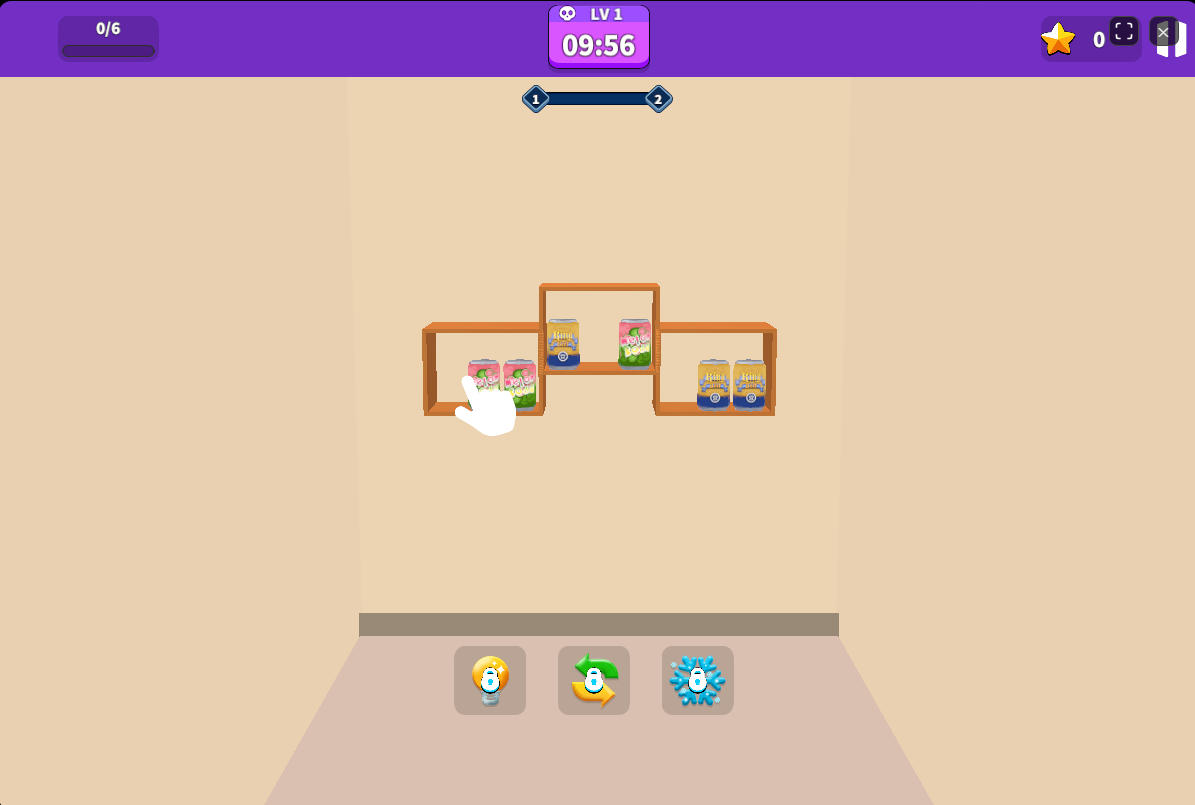
The core elimination mechanic is strict: you must gather exactly three identical items into the very same cabinet grid. Once three matching items share a grid, they are instantly boxed up and eliminated from the board. You can freely tap and move any front-facing item to a different grid, provided there is physical space for it. However, the game throws a massive wrench into this process: Hidden Layers.
Cabinets in this game are incredibly deep. The items you see on the surface are often blocking two or three layers of items hidden directly behind them. When you eliminate a set of three from the front layer, the items stored in the deeper recesses of that specific grid automatically slide forward, revealing themselves. This means you are essentially playing a 3D puzzle on a 2D screen. You cannot simply clear what you see; you have to actively "dig" through the shelves to uncover the buried items necessary to complete your other matches.
Phase 2: Master-Level Strategy — The "Transfer Grid" Technique
If there is one singular concept you must internalize to beat the advanced levels, it is the concept of the Transfer Grid (sometimes called a Buffer Zone). The most common mistake amateur players make is spreading their items too thin, placing one soda can here, another there, until every single shelf is full of mismatched pairs. When every grid is occupied, your board is deadlocked.
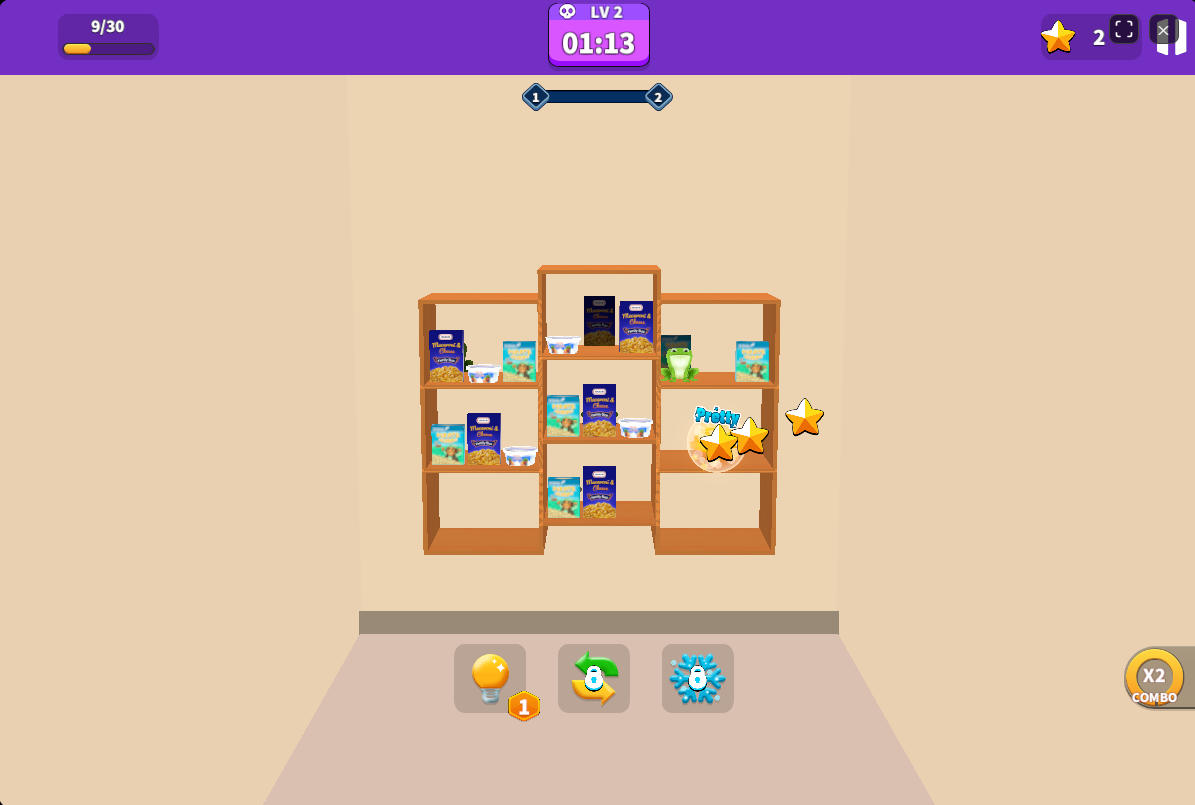
To avoid gridlock, your very first priority when a level starts should be to completely empty one single grid slot. Find a grid that has easily matchable items on its surface, and systematically move or eliminate those items until that specific grid is 100% vacant. Congratulations, you have just created a Transfer Grid.
Once you have a completely empty shelf, treat it like a temporary holding cell. Do you see two identical cereal boxes on opposite sides of the screen, but their respective shelves are too full to unite them? Move both cereal boxes into your empty Transfer Grid. Then, hunt down the third box and drop it in. *Poof*, they eliminate, and your Transfer Grid immediately becomes empty again, ready for the next operation. This rolling buffer zone is the absolute key to maintaining board fluidity.
Furthermore, this technique is vital for "Layer Peeling." If you suspect a crucial item is buried in the back of Shelf A, but Shelf A's front items have no current matches, you can temporarily dump Shelf A's front items into your Transfer Grid, revealing the hidden item behind them. Once you use that hidden item to trigger a match elsewhere, you can move the junk items back. It is a constant shell game of spatial management.
Gameplay Walkthrough: Watch the Sorting Masterclass
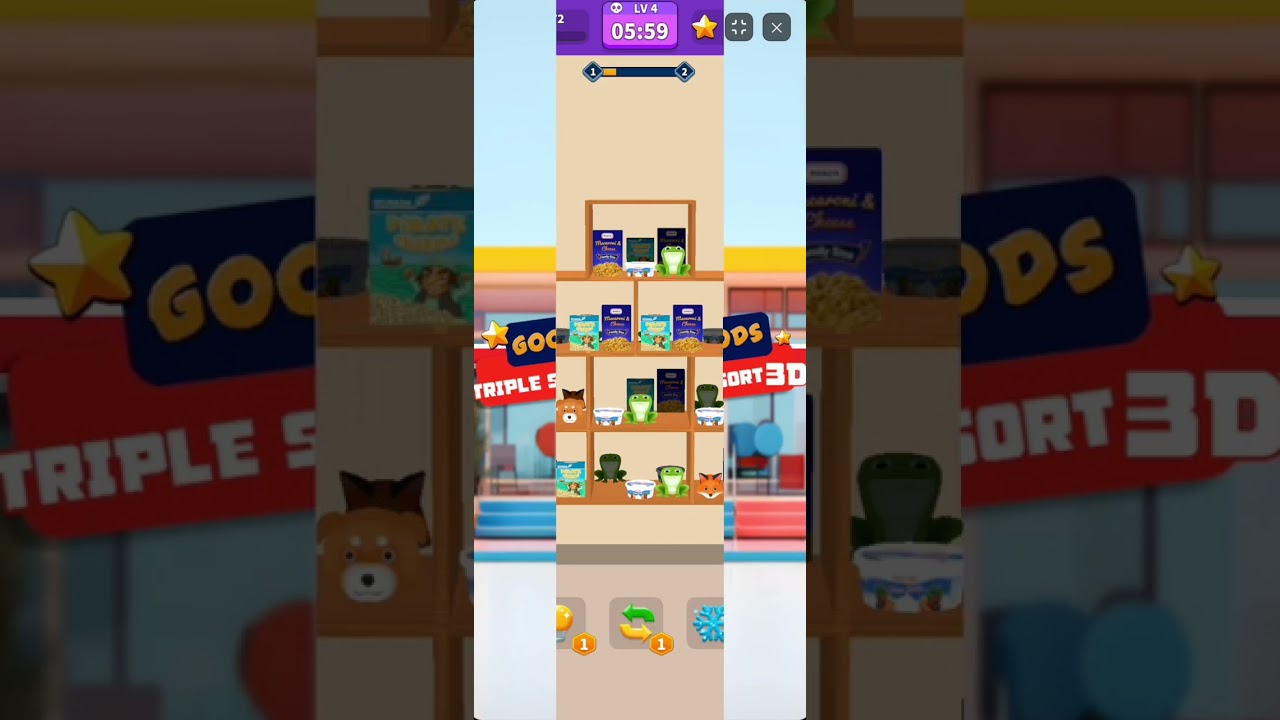
Reading about spatial management is helpful, but witnessing a high-level player fluidly shuffle items and manipulate the hidden layers is the best way to train your own brain. Watch the gameplay demonstration below. Pay close attention to how aggressively the player works to create an empty buffer zone, and notice how they rarely leave a grid completely disorganized. Every move is calculated to either trigger an immediate elimination or uncover a deeper layer.
Phase 3: The Power-Up Arsenal – When to Drop the Hammer
Even with flawless Transfer Grid management, you will inevitably encounter levels where the RNG (Random Number Generation) of the hidden layers is completely against you, or the timer is simply too aggressive. To combat this, the game provides three highly impactful power-ups. Knowing exactly when to deploy them—rather than panicking and spamming them—will save your run.
1. The Hint Tool (The Auto-Matcher)
The Hint power-up is your precision sniper rifle. When activated, the game takes over and automatically groups and eliminates one set of three identical items from the current board. This is incredibly powerful because it requires zero effort on your part and bypasses gridlock.
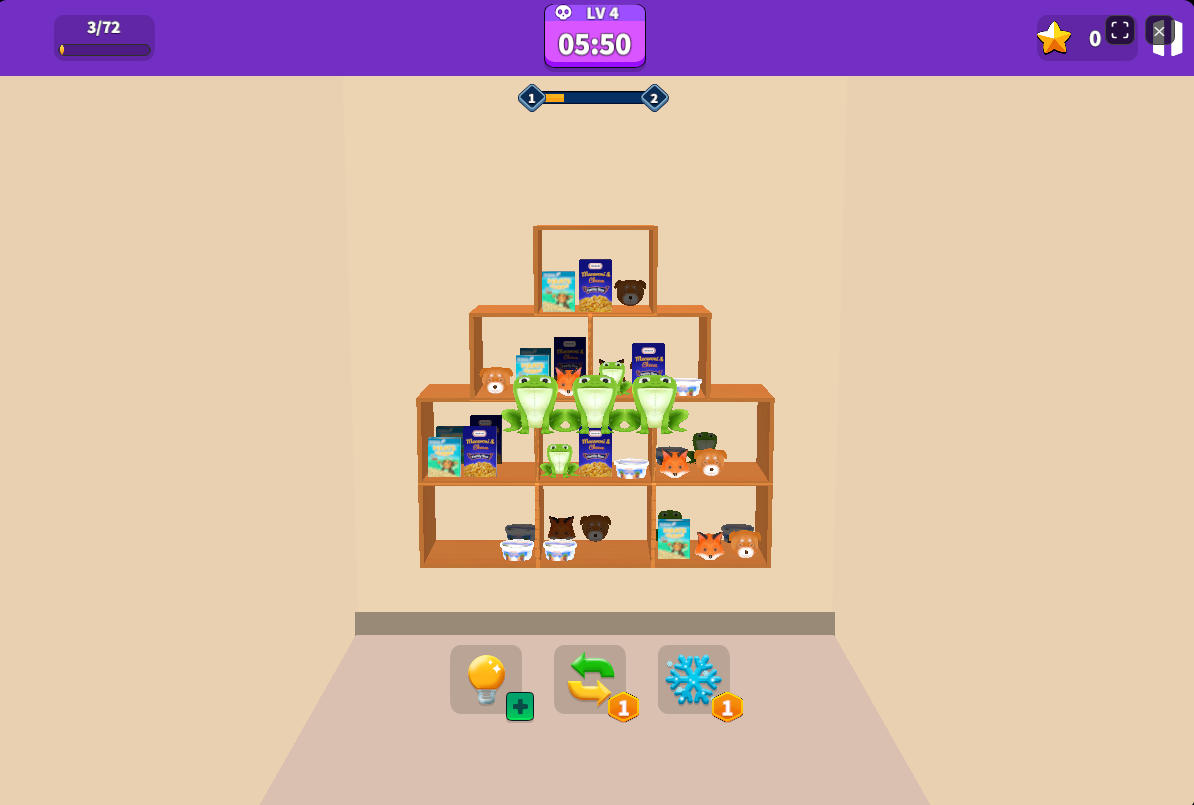
Pro Strategy: Do not use this just because you are feeling lazy. Save the Hint for when your board is completely gridlocked (every shelf is full and you cannot manually shuffle anything). The Hint will force a match, which clears a grid, instantly gifting you a brand-new Transfer Grid to resume your manual sorting.
2. The Refresh Tool (The Board Shuffler)
The Refresh power-up is your tactical nuke. It takes every single item currently visible in the cabinet grids and randomly reshuffles their positions across the board.
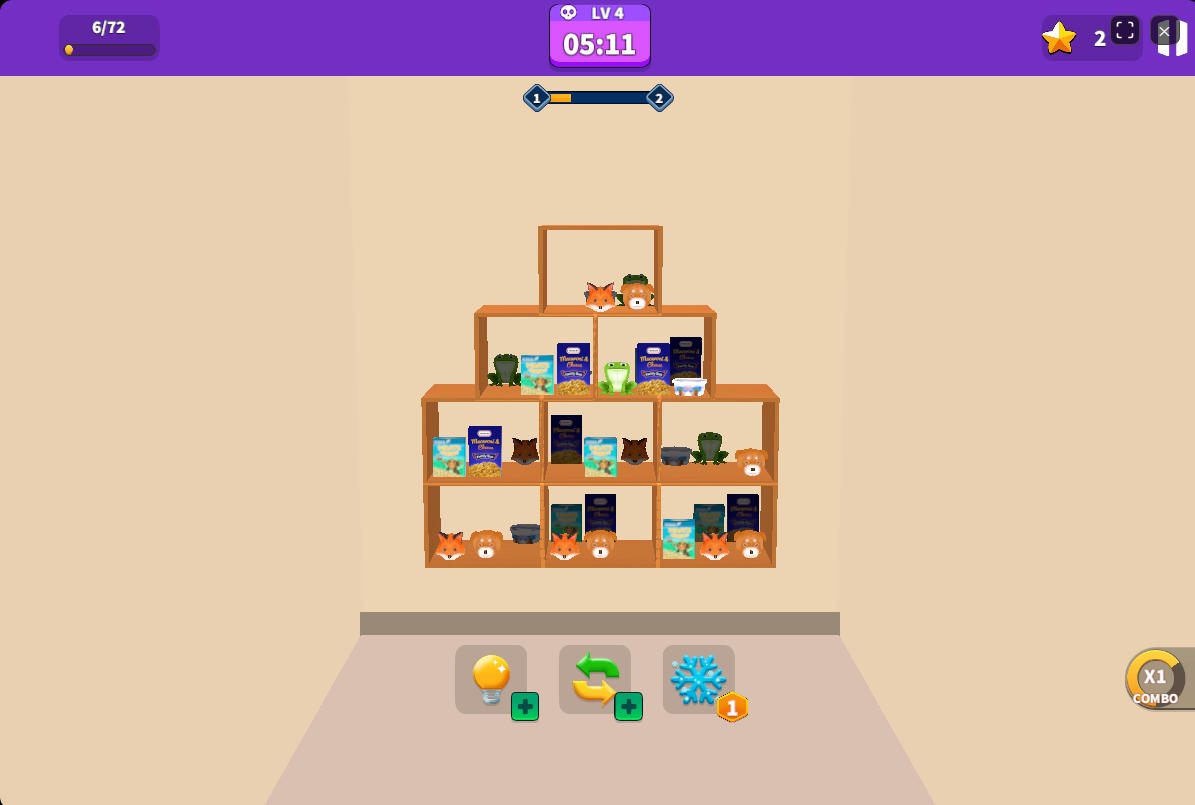
Pro Strategy: Use Refresh only as a last resort. If you have a beautifully organized board with lots of pairs waiting for their third match, hitting Refresh will ruin your hard work. Only trigger this when the board state is absolute garbage—when you have no pairs, no empty space, and the buried items are utterly inaccessible. A fresh shuffle can breathe new life into a doomed run.
3. Time Freeze (The Lifeline)
The Time Freeze does exactly what it says: it halts the relentless countdown clock for a set duration, allowing you to breathe, analyze the board, and execute a flurry of moves without the pressure of impending failure.
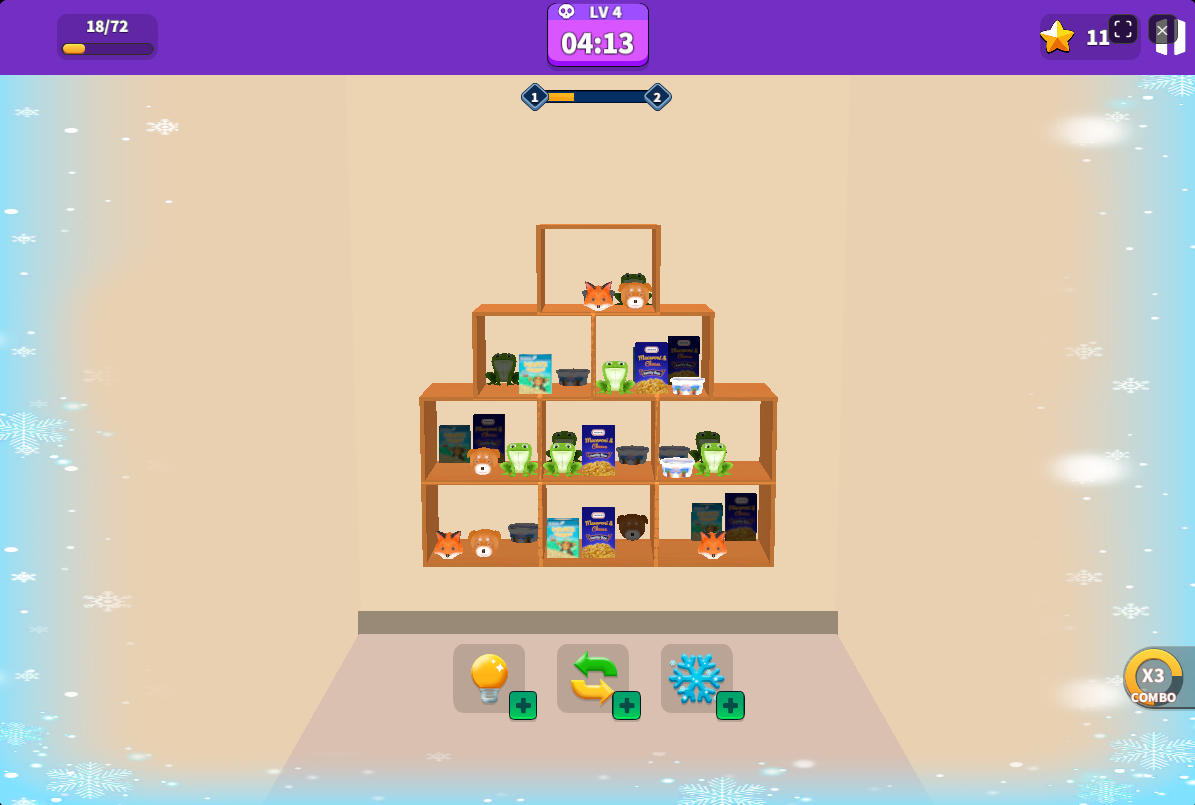
Pro Strategy: The best time to pop a Time Freeze is when you have successfully peeled back the front layers and suddenly exposed a massive cluster of easy matches. If you can see three or four clear eliminations waiting to happen, but only have 10 seconds left, pop the Freeze. You can rapid-fire clear the board while the clock sits still, effectively stealing a victory from the jaws of defeat.
Final Verdict: Method in the Madness
Goods Triple Sort is an incredibly clever evolution of the match-3 formula, wrapping severe spatial puzzles in the comforting aesthetic of grocery organization. By abandoning haphazard swiping, diligently creating and utilizing Transfer Grids, and holding your power-ups for critical deadlock moments, you will transform from a chaotic shopper into an undisputed master of inventory. Keep your shelves clean, watch the clock, and get sorting!