If there is one thing the mobile gaming community has proven over the last decade, it is that we are absolutely obsessed with the satisfying simplicity of swipe-to-merge puzzles. Titles that require you to slide blocks across a grid have dominated our daily commutes and late-night gaming sessions. However, Merge Brick takes this beloved, familiar formula and injects it with a potent dose of strict spatial logic and unforgiving move limits. This isn't just about swiping randomly until things combine; this is a highly calculated labyrinth where every single directional input matters.
While the initial levels of Merge Brick act as a gentle, almost therapeutic introduction, letting you joyfully smash colorful squares together, veteran players know that a brutal difficulty spike is lurking just around the corner. If you find yourself effortlessly clearing the early stages, only to be completely stonewalled and frustrated the moment the game introduces a second color, you are not alone. In this massive, 1,000+ word deep-dive strategy guide, we are going to completely deconstruct the physics and logic of Merge Brick. From mastering the "frictionless slide" mechanic to understanding how to use opposing colors as tactical barricades, we will equip you with the mental tools needed to conquer every single grid.
Phase 1: Understanding the Frictionless Slide and Move Economy
At its core, Merge Brick operates on a simple, universal gesture: swipe up, down, left, or right. When you input a direction, all movable blocks of the corresponding color on the grid will travel in that exact direction. However, the defining characteristic of this game’s physics engine is the Frictionless Slide.
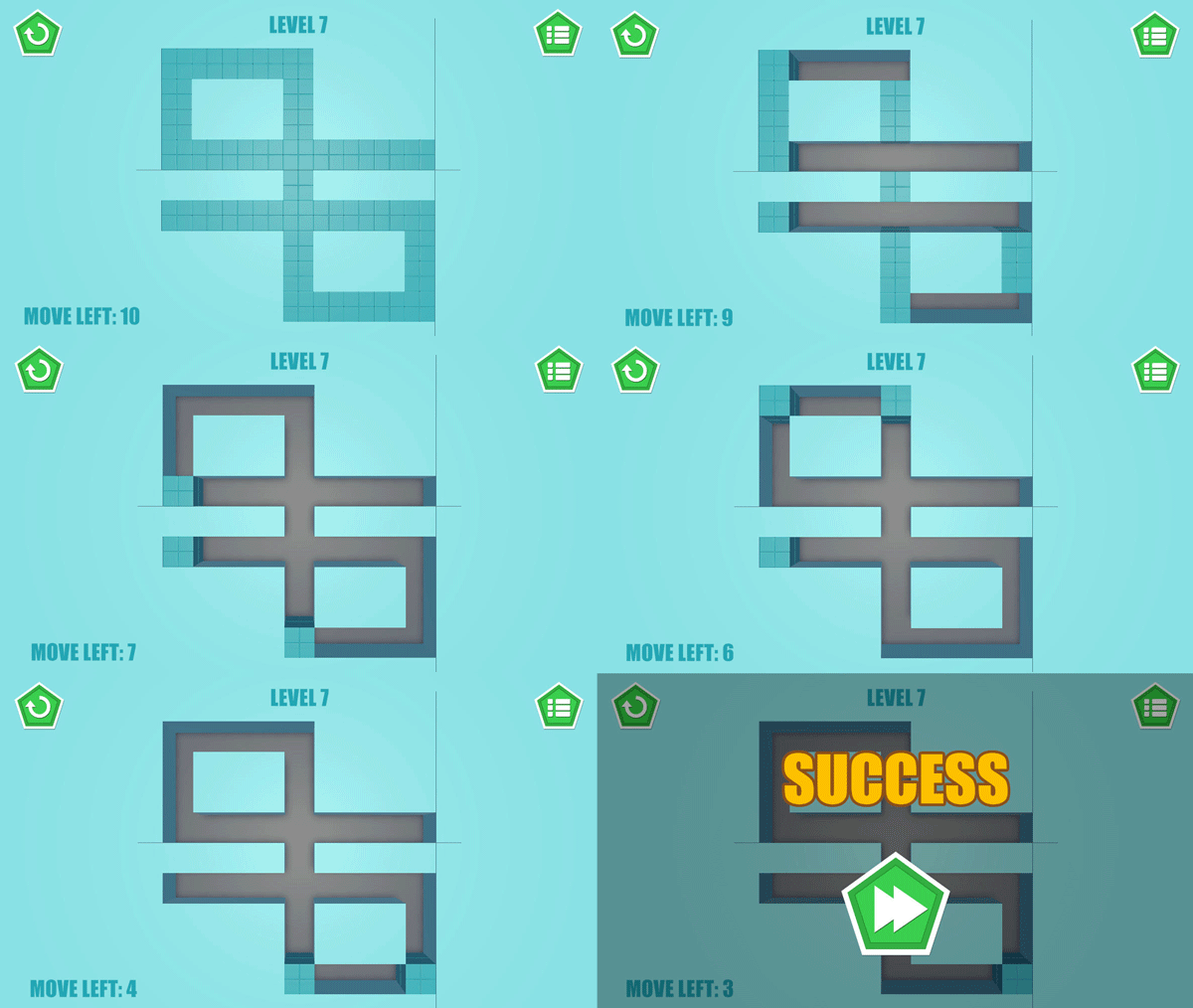
Unlike moving a piece on a chessboard one square at a time, when you swipe left in Merge Brick, the block doesn't just move one tile. It slides continuously across the map until it physically slams into a solid wall, an immovable obstacle, or another block of the same color. When two blocks of the exact same color collide, they instantly overlap and merge into a single, unified block. Your ultimate goal is to consolidate every single block of a specific color into one final, remaining brick.
The game does not allow you to endlessly shuffle blocks around until you stumble upon the solution by pure luck. Every level comes with a strict, predetermined Move Limit displayed at the top of your screen. Every time you swipe the screen—even if that swipe doesn't result in a merge—you consume a move. If you run out of moves before all identical blocks are merged into one, you instantly fail the challenge. This transforms the game from a casual swiper into a high-stakes puzzle of extreme efficiency. You must plot the shortest possible route in your head before your finger ever touches the glass.
Phase 2: The Level 13 Difficulty Spike – The Multi-Color Dilemma
If you've played up to Level 12, you might think you have the game completely figured out. You bounce a single color around the maze, merging pieces easily. But the moment you cross the threshold into Level 13, Merge Brick fundamentally changes its identity. The game introduces a second color to the map.
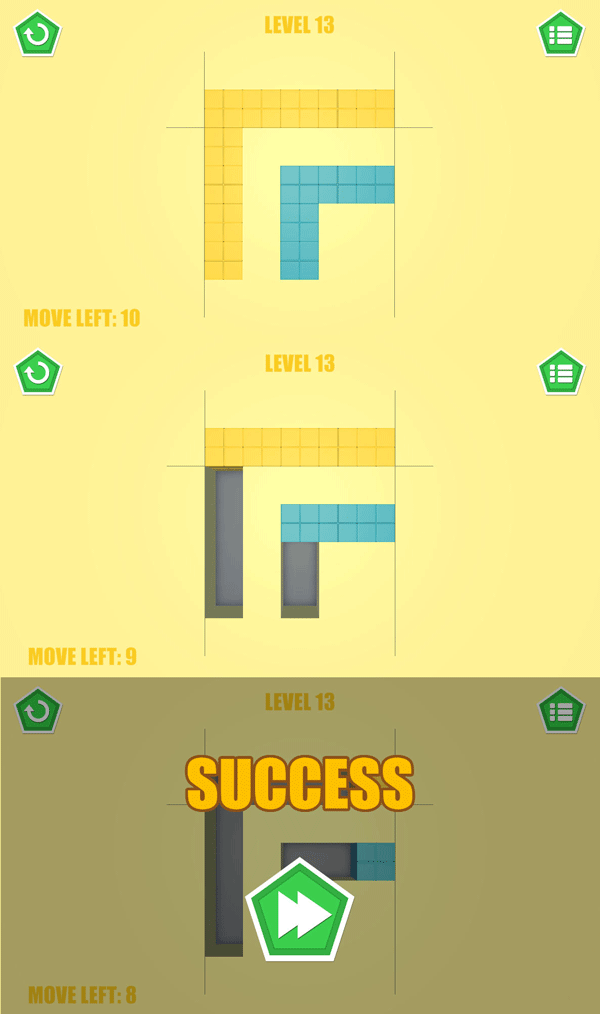
This is where the true genius of the puzzle design reveals itself. Blocks of different colors cannot merge with each other. Instead, they act as solid, physical walls for one another. If you swipe right to move your blue blocks, but there is a red block sitting in the middle of the hallway, your blue block will slam into the red block and stop dead in its tracks.
This "mutual blocking" mechanic creates a brilliant layer of sequence planning. You can no longer just look at one color; you must manage both simultaneously. A common rookie mistake is to focus entirely on merging all the blue blocks first, only to realize that by doing so, you have accidentally pushed the merged blue block into a corner where it completely traps a red block, rendering the level unsolvable. You must constantly ask yourself: "If I move the red block here to merge it, what pathways am I blocking for the blue blocks?"
Gameplay Walkthrough: The Logic in Motion
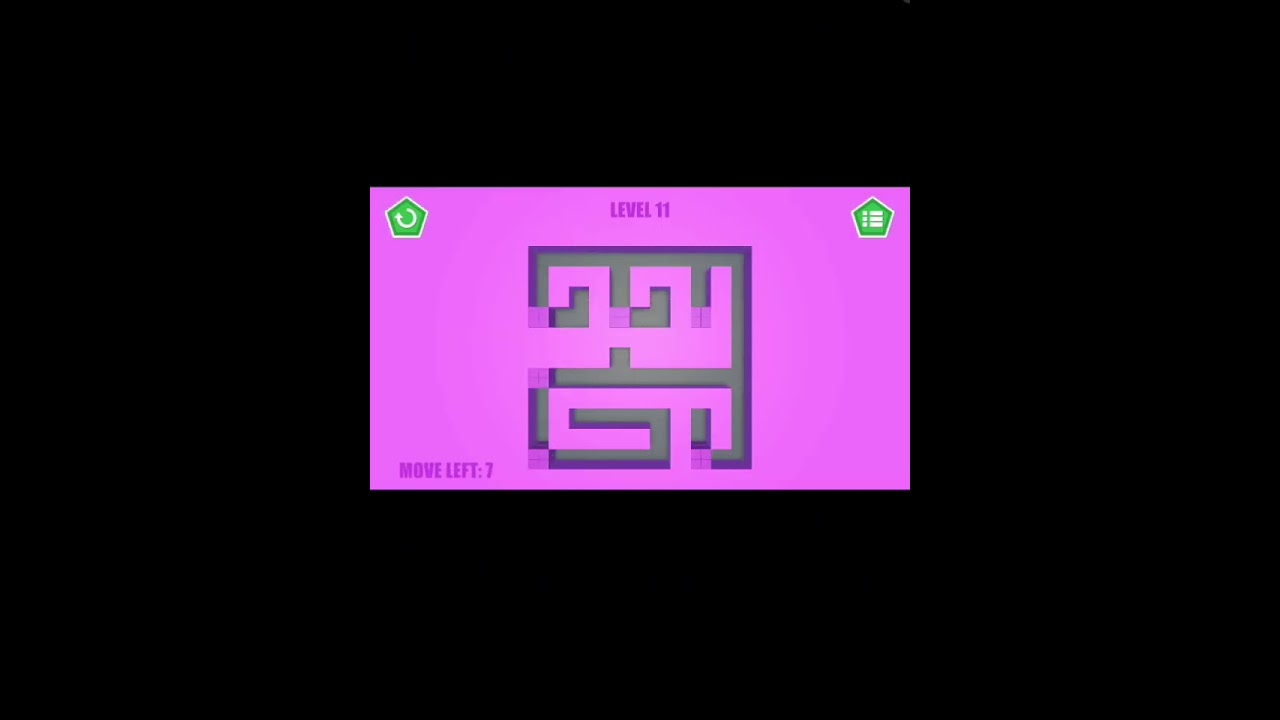
Theoretical strategies are essential, but observing the mechanics executed in real-time is vital for training your spatial awareness. Watch the gameplay demonstration below, which showcases the progression from the introductory levels all the way through the dreaded Level 13 difficulty spike. Pay close attention to how the player intentionally uses one color to "catch" the other color in the middle of an open space, creating an artificial wall where none existed before.
Phase 3: Advanced Pro Tactics for Grid Mastery
To ensure you never get permanently gridlocked in the later stages of the game, you must internalize these advanced puzzle-solving principles:
1. The "Anchor Block" Strategy
In almost every level, there is one block that is positioned in a highly restrictive area—perhaps tucked deep into a corner or a narrow single-lane corridor. We call this the Anchor Block. Because the Anchor Block has very limited maneuverability, you should never try to move it out to meet the other blocks. Instead, you must use your swipes to navigate the other, free-roaming blocks towards the Anchor Block. Bring the mountain to Muhammad.
2. Artificial Wall Creation
In multi-color levels, you will frequently encounter scenarios where two blue blocks need to merge, but they are in a massive, open square room. If you swipe left, they both hit the left wall. If you swipe right, they both hit the right wall. They never collide. How do you merge them? You must use a red block! Position a red block right in the middle of that open room. Now, swipe your blue blocks. One blue block will hit the wall, but the other blue block will hit the red block, offsetting their alignment. On your next swipe, they will be perfectly positioned to smash into each other. Mastering the use of opposing colors as "brakes" is the single most important skill in the game.
3. Counting the Grid (Reverse Engineering)
When you only have 4 moves left and 3 blocks scattered across the map, do not panic swipe. Work backward from the solution. Identify the exact grid tile where the final merge must happen. Then, calculate the trajectory needed for each block to reach that specific tile. If a block needs to go Up, then Left, then Down, that is 3 moves. If you only have 2 moves left, your planned final merge tile is incorrect. Recalculate immediately before swiping.
Final Verdict: A Masterclass in Spatial Reasoning
Merge Brick is a brilliantly executed minimalist puzzle game that commands respect. It strips away all the unnecessary fluff, timers, and stressful combat mechanics found in other mobile titles, leaving you with a pure, unadulterated logic puzzle. By understanding the frictionless slide, fiercely protecting your move limit, and weaponizing the multi-color blocking mechanics to your advantage, you will transform from a casual swiper into a true grid architect. The maze is waiting for you—take a deep breath, calculate your vectors, and let the merging begin!