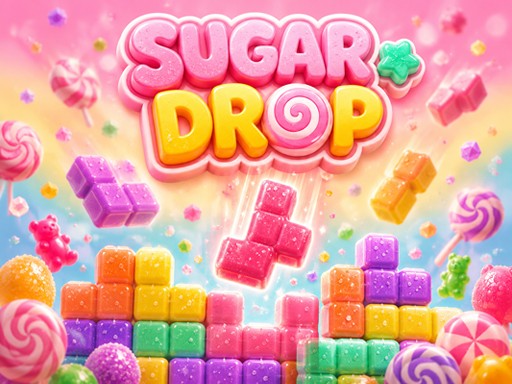
At first glance, casual block puzzle games might all seem straightforward. However, every once in a while, a title comes along that strikes an ideal balance between vibrant, tactile satisfaction and deep strategic decision-making. Sugar Drop is precisely that game. Wrapped in a charming, sugar-coated visual package featuring candy-themed tiles and delightful pop animations, Sugar Drop delivers an addictive puzzle experience where every single piece placement carries immense weight.
If you have ever found your board suddenly jammed with awkward shapes, forcing an unexpected game over, you know that reckless dragging will only get you so far. To push your personal best into the upper echelons of global leaderboards, you need more than just good luck—you need a structured operational framework for spatial management, risk mitigation, and combo generation. In this comprehensive guide, we will break down the essential mechanics of Sugar Drop, share advanced board control techniques, and show you how to execute high-value candy chain reactions.
Phase 1: Deconstructing Core Mechanics & Board Rules
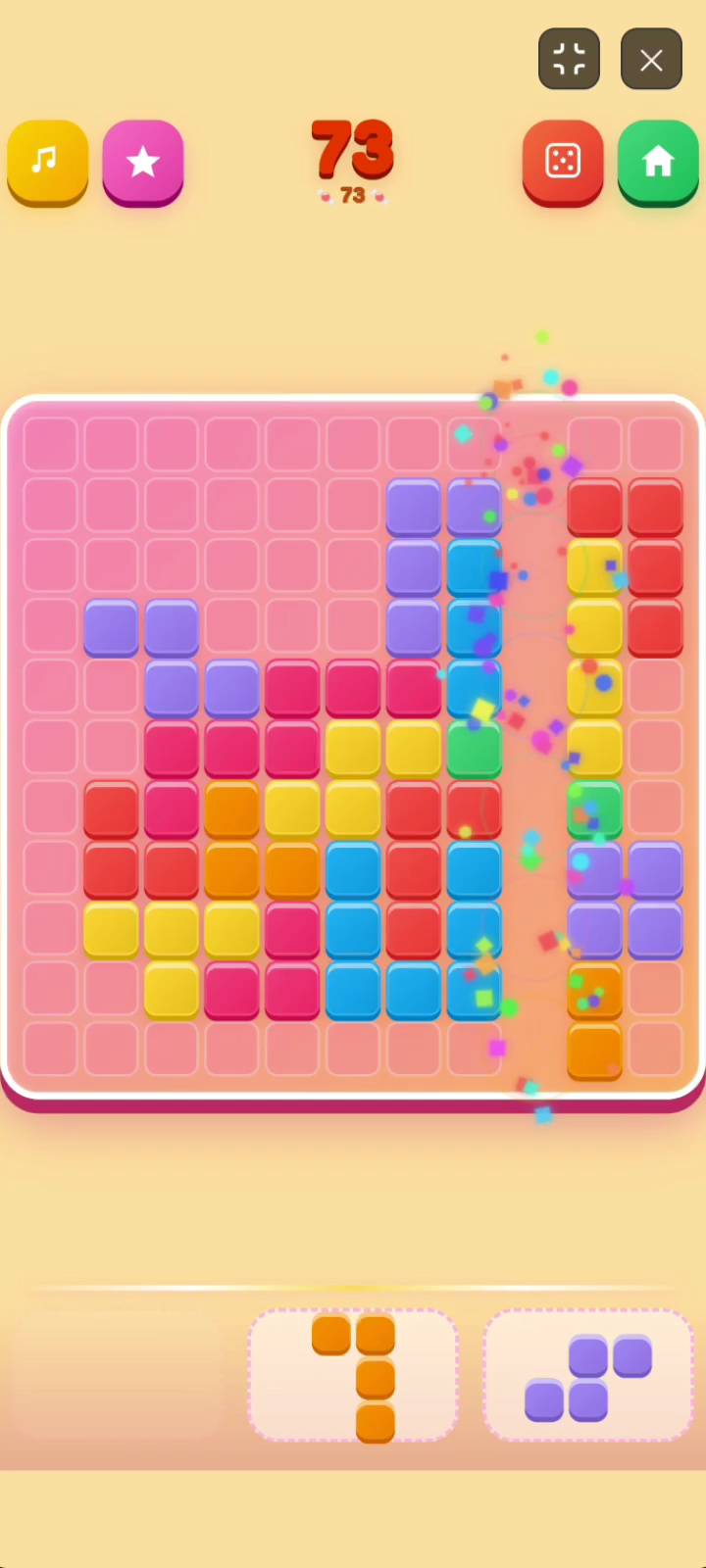
The beauty of Sugar Drop lies in its accessible ruleset combined with strategic depth. Unlike classic gravity-bound falling block games like Tetris, Sugar Drop gives you complete spatial freedom. You are presented with a clean grid board and a selection tray at the bottom containing three distinct candy block configurations. Your objective is simple yet exacting: drag and drop these polyomino candy shapes onto open grid slots to complete full horizontal rows or vertical columns.
Whenever a complete line (either row or column) is filled without any empty spaces remaining, those tiles instantly pop, triggering juicy visual feedback and rewarding you with instant score points. Crucially, clearing lines frees up vital board space, allowing you to cycle through your piece tray and draw new block sets.
Unlike games with safety buffers or piece rotations, Sugar Drop ends the second your active tray contains a piece that physically cannot fit anywhere on the board. A single misplaced 3x3 block or long 5-tile bar placed without foresight can lock up your entire board state. Every placement must maintain flexible space for incoming pieces!
Phase 2: Master Class in Grid Spatial Management
High scores in Sugar Drop are built on proactive layout construction rather than reactive emergency saves. To maintain long play sessions, adopt the spatial discipline practiced by puzzle grandmasters.
1. Prioritize Center Real Estate Maintenance
The center of the board is your most flexible operational area. It intersects with multiple horizontal and vertical clearing paths simultaneously. Try to stack your persistent building blocks along the edges and corners of the grid while keeping the central 4x4 zone as open as possible. A clear center makes it drastically easier to drop large or asymmetrical shapes when they appear in your tray.
2. Eliminate "Dead Cells" Immediately
A "dead cell" is an isolated single empty slot surrounded by placed candy blocks. Because single 1x1 blocks appear infrequently, trapped empty slots reduce your functional line-building capacity. Always scan the board for potential 1-tile gaps before dropping a piece, and structure your placements so that every open space remains accessible to standard 2-tile or L-shaped blocks.
3. Maintain Dual-Line Thresholds
Instead of clearing lines the exact moment they are complete, construct your grid so that multiple parallel rows or intersecting columns are all sitting at 80% to 90% completion (just needing a single block to pop). This setup allows you to drop a strategic anchor block that triggers massive simultaneous clears.
Phase 3: Triggering Explosive Candy Combos & Chain Reactions
Points in Sugar Drop increase exponentially when you clear multiple lines in a single drop or achieve back-to-back line pops over successive turns. Understanding how score multipliers work is the single biggest key to topping the leaderboard.
- The Cross-Clear Setup (Simultaneous Row + Column): The highest value single-move play occurs when a single tile completes both a vertical column and a horizontal row at their intersection point. This cross-clearing move awards massive bonus multipliers and instantly cleans out large sections of your workspace.
- Tray Forecasting Strategy: Never place your first candy block without analyzing all three available shapes in your bottom dock. Mentally sequence your move order: drop Piece A to bridge a gap, drop Piece B to trigger the line pop, and save Piece C for the newly opened territory.
- Color & Theme Aesthetics: Sugar Drop features six stunning candy visual themes. Take advantage of the pleasant visual cues and satisfying sound effects to establish a relaxed, methodical rhythm. Because there is no ticking game clock, take all the time you need to double-check your math before placing a piece.
Gameplay Walkthrough: Live Challenge Showcase
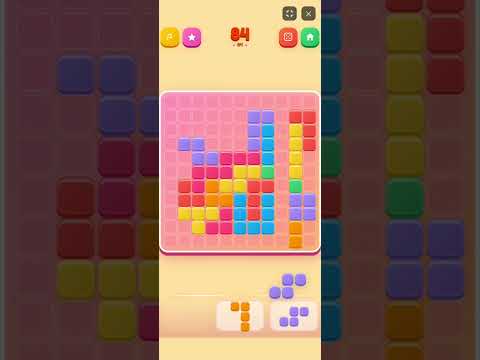
To truly grasp the flow of high-level Sugar Drop play, observe how experienced players manage tight space constraints during tough piece draws. Watch the gameplay video below to see real-time block placement, multi-line combo triggers, and high-score survival maneuvers in action.
Cognitive & Brain Training Benefits of Sugar Drop
Beyond being an ultra-satisfying casual game to unwind with, Sugar Drop acts as a fantastic cognitive exercise for players of all ages. Regular play stimulates multiple mental functions:
- Spatial Visualization: Mentally rotating and fitting irregular geometric polyominos onto a fixed 2D grid improves visual-spatial intelligence.
- Forward-Thinking & Risk Assessment: Evaluating potential piece draws and managing board capacity enhances working memory and decision-making speed.
- Pattern Recognition: Rapidly spotting near-complete lines across busy, colorful board states trains visual scanning efficiency.
Frequently Asked Questions (FAQ)
Q: How is Sugar Drop different from traditional Tetris?
A: In classic Tetris, blocks continuously fall from the top under time pressure, and you can rotate them as they descend. In Sugar Drop, you have unlimited time to drag and drop stationary candy shapes onto an open grid from a selection tray. You clear space by filling complete rows or columns anywhere on the board.
Q: Is Sugar Drop completely free to play without installation?
A: Yes! Sugar Drop is built using modern HTML5 web technology. You can play it instantly inside any web browser on desktop PCs, laptops, tablets, or smartphones without downloading any app or software.
Q: What is the best strategy when given three large 3x3 blocks?
A: Large 3x3 shapes are the most dangerous blocks in Sugar Drop. Always maintain at least one wide-open 3x3 section on your grid specifically to absorb these massive pieces. If you get caught without space, try to place smaller pieces first to complete a line that clears enough room for the large block.
Final Verdict: A Delightfully Sweet Puzzle Masterpiece
With its vibrant candy aesthetics, crisp elimination sound effects, and deeply satisfying logic gameplay, Sugar Drop is a standout puzzle experience. It is easy enough for anyone to pick up in seconds, yet offers infinite strategic depth for puzzle enthusiasts chasing that perfect run. Apply the spatial management tips, plan your combo chains, and jump into Sugar Drop today to see how high you can score!