At first glance, drawing a line to guide water into a glass sounds like an activity meant for a toddler. However, veterans of the physics-puzzle genre know that fluid dynamics simulators are anything but child's play. Water Flow Happy Glass takes this beloved, deceivingly simple concept and dials up the complexity by introducing rigid gravitational physics and highly interactive environmental obstacles. Your mission is straightforward: observe the water pipe opening, draw a custom line to build a bridge or a ramp, and ensure the sad, empty cup fills with water until it's perfectly happy. But achieving that goal on the later stages requires the mind of a structural engineer.
If you're currently staring at your screen in frustration, watching helplessly as your hastily drawn lines get swept away by the sheer weight of the rushing water, or seeing your precious liquid bounce wildly off screen, you need a fundamental shift in your drawing strategy. This isn't MS Paint; every line you draw becomes a physical object with weight, mass, and friction. In this massive, 1,000+ word deep-dive strategy guide, we are going to tear down the physics engine of Water Flow Happy Glass. We will teach you the art of "Structural Anchoring," how to manipulate the brutal momentum of Ice Blocks, and how to harness Bounce Blocks to achieve seemingly impossible trajectories.
Phase 1: The Art of the Line – Gravity and Structural Anchoring
Before we even discuss the obstacles, we must address the fundamental physics of the line itself. The moment your finger or mouse leaves the screen, your drawn line ceases to be just ink—it becomes a solid physical beam that is instantly affected by gravity.
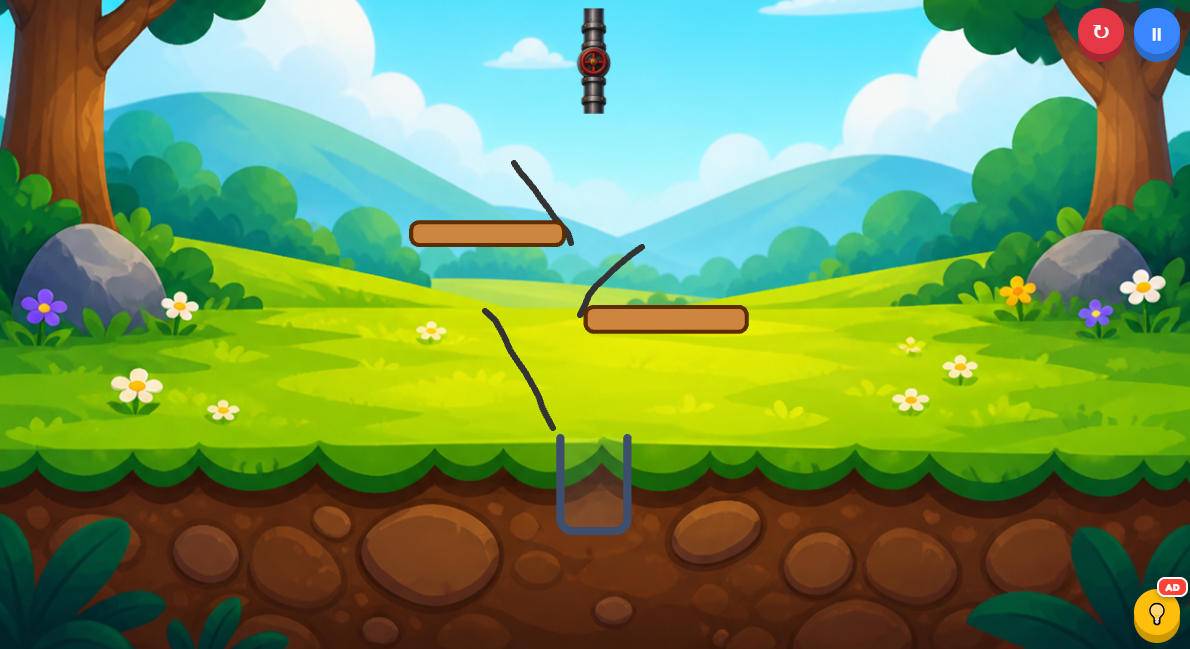
The most common mistake new players make is drawing a simple, straight diagonal line from the pipe to the cup, completely unattached to any surrounding environment. The moment the pipe opens, the kinetic energy and physical weight of the rushing water will hit that flimsy line, pushing it right off the screen. To prevent this, you must master Structural Anchoring.
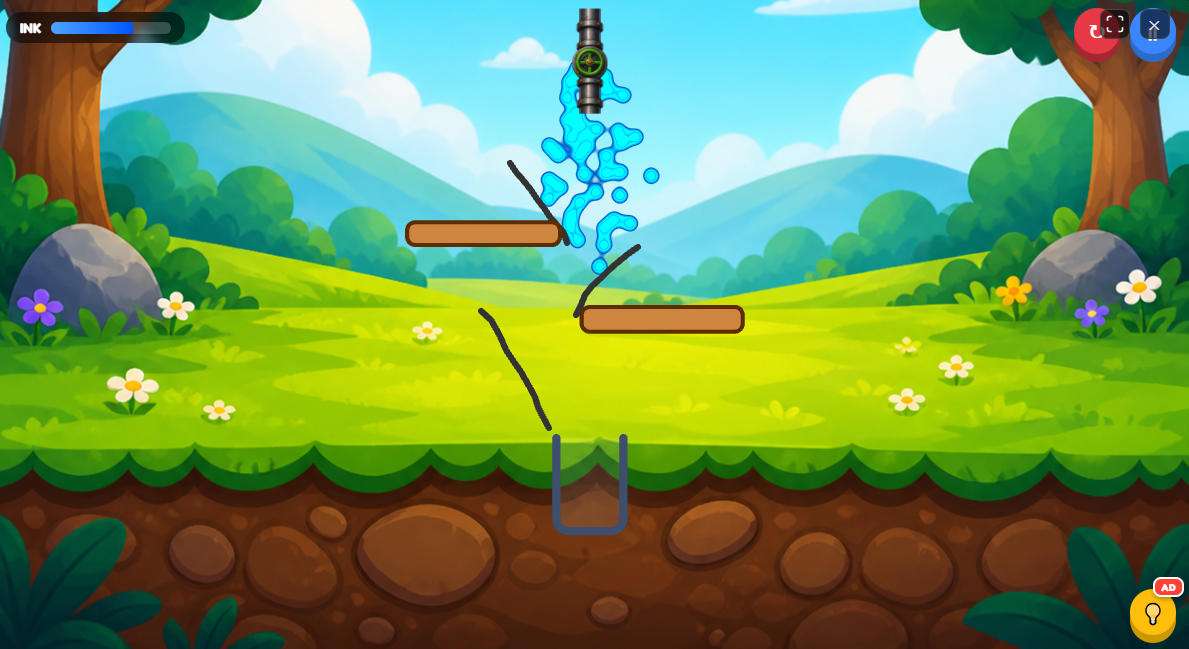
To anchor a line, you must "hook" the ends of your drawing onto static environmental elements. If there is a floating platform, draw your line so it curves around the edge of that platform like a coat hanger. This creates leverage. When the water hits your ramp, the hook catches onto the platform, holding your ramp firmly in place. Always ask yourself: "If I drop a heavy bag of sand on this line, will it hold?" If the answer is no, you need to add a hook or a counterweight.
Phase 2: Conquering the Environmental Obstacles
As you progress deeper into the campaign, the game abandons empty space and litters the levels with three distinct types of interactive blocks. You cannot draw through these blocks, so you must either utilize their unique physical properties or completely bypass them.
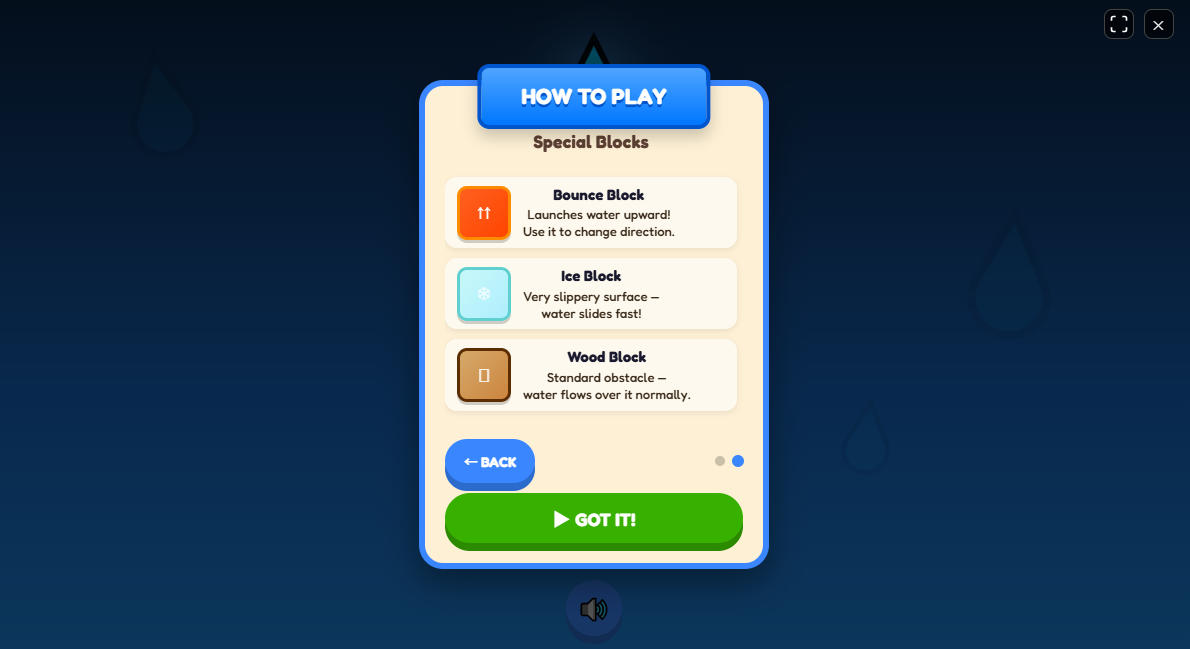
1. The Wood Block (The Standard Barricade)
Wood blocks are your standard, reliable physical barriers. Water flows over them at a normal, predictable speed with standard friction. While they often block the direct path to the cup, they are your best friends for Structural Anchoring. You can rest your drawn lines heavily on top of wood blocks to create perfectly stable bridges. Use them as the foundational pillars of your water-delivery aqueducts.
2. The Ice Block (The Speed Trap)
Ice blocks are incredibly dangerous. They possess a nearly frictionless surface. When water touches an ice block, it doesn't just flow; it accelerates exponentially. If you allow water to slide down a steep icy slope, it will launch off the end like a rocket, completely overshooting the cup.
To counter this, you must practice Momentum Bleeding. If water is forced to travel across ice, you must draw a "catcher's mitt" or a "U-bend" at the bottom of the icy slope. This curved line will catch the high-speed water, force it to swirl around (bleeding off its kinetic energy), and then gently drip down into the cup below. Never let water free-fall directly off an ice block.
3. The Bounce Block (The Trajectory Modifier)
Bounce blocks are the wildest variable in the game. These spring-loaded platforms violently launch water upward upon impact. Initially, they seem like a nuisance, scattering your water everywhere. However, elite players use them to bypass massive walls.
If you have to use a Bounce Block, do not just let the water fly blindly into the air. Draw a "Deflection Ceiling"—a flat or angled line hovering directly above the Bounce Block. When the water hits the bounce pad, it will shoot up, hit your drawn ceiling, and ricochet directly sideways into the waiting cup. You are essentially building a pinball machine for fluids.
Gameplay Walkthrough: Watch the Physics in Motion
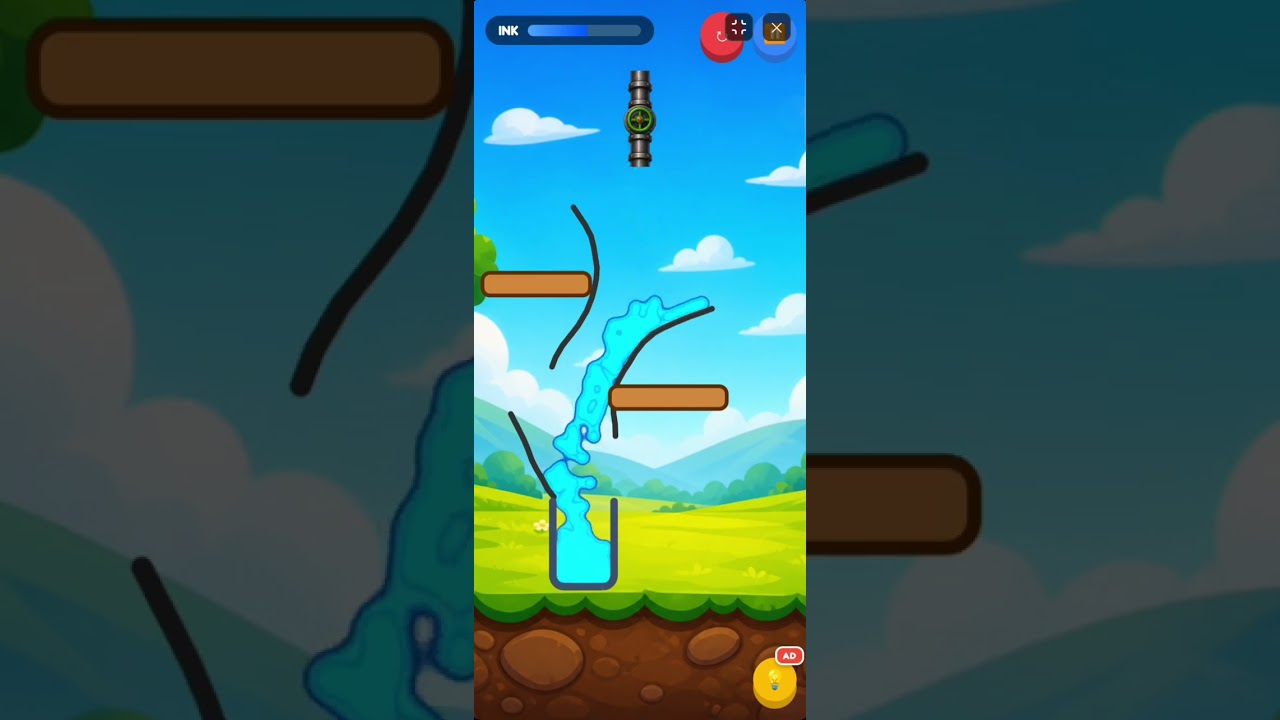
Reading about fluid dynamics and structural anchors is important, but witnessing the physics engine react in real-time is the best way to train your intuition. Watch the gameplay video below. Notice how the player doesn't just draw straight lines; they draw scoops, hooks, and funnels. Pay close attention to how they manage the chaotic rebound of the Bounce Blocks using carefully angled ceiling deflections.
Phase 3: The "V-Funnel" and Ink Conservation
A major psychological hurdle in drawing puzzle games is the fear of spillage. You do not need to capture 100% of the water that leaves the pipe to beat the level. The cup has a specific fill-line. If you lose 10% of the water over the edge of a cliff, but the remaining 90% makes it to the cup, you still win. Do not over-engineer your drawings to save every last drop.
If you are struggling with water splashing out of the cup upon arrival, employ the V-Funnel Technique. Instead of drawing a ramp that ends right at the lip of the cup (which causes high-speed water to splash out), draw a large "V" shape directly above the cup. Guide the water into this wide V, allowing the water to pool and calm down, then let it drain through a tiny hole at the bottom of the V directly into the glass. This completely neutralizes the splashing effect.
Final Verdict: Engineer Your Victory
Water Flow Happy Glass is an outstanding test of spatial reasoning, foresight, and basic physics. It punishes lazy, unanchored scribbles but immensely rewards creative, structurally sound engineering. By mastering the art of the hook, bleeding off momentum from ice blocks, and controlling the chaotic energy of bounce blocks, you will ensure that every single glass you encounter ends up filled to the brim and perfectly happy. Grab your virtual pen, analyze the gravity, and let the water flow!