Black Hole Fill 3D Strategy Guide: Master Physics Sweeping & Size Retention
Few interactive formats deliver the immediate sensory gratification of vacuum-style clearing mechanics, but when mixed with rigid-body physics, the formula shifts into a deeply engaging strategy puzzle. Black Hole Fill 3D takes this highly compelling casual premise and strips away all unnecessary clutter to focus entirely on precision movement and spatial optimization. As the operator of an insatiable cosmic void, your job is simple on paper but tough in practice: glide across an item-dense grid, consume objects ranging from miniature components to heavy structures, and transport that mass to a target zone before the clock runs out.
The accessibility of the drag-to-move input scheme means casual players of all age brackets can jump right into the action without a complex tutorial. However, don't let the clean visual style fool you; advanced levels feature narrow choke points, awkward geometric shapes, and strict time limits that will quickly shut down a careless run. Beating these high-difficulty stages requires more than just spinning around randomly. You need a solid understanding of how hitboxes interact at your perimeter, smart path planning, and a clever understanding of the game's built-in progression fail-safe.
The Core Physics of Perimeter Volume Restrictions
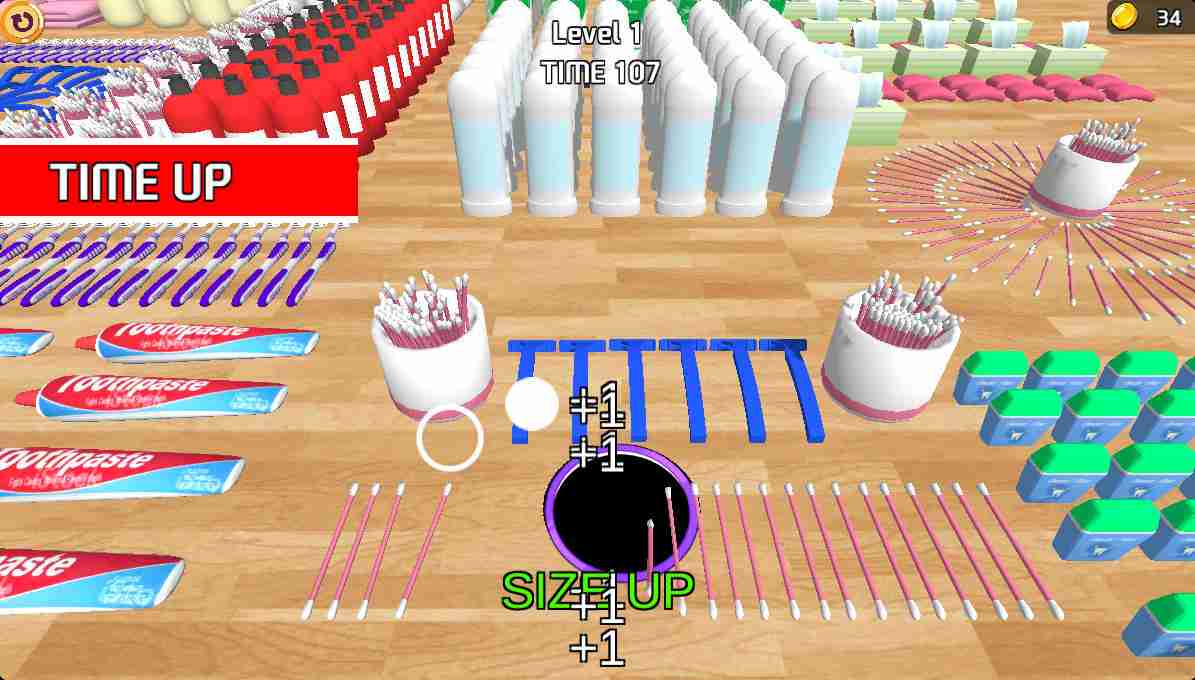
The operational foundation of Black Hole Fill 3D relies on a hard mathematical boundary check: a prop can only sink below the floor level if its complete physical width is smaller than the active diameter of your event horizon. Attempting to slide under a structure that exceeds your current scaling threshold results in an immediate collision block. The item will tilt awkwardly against your rim, pushing smaller items out of reach and wasting precious seconds as you struggle to shake it loose.
Because of this scaling rule, efficient players approach every new board with a strict item-size hierarchy in mind. When dropping into a fresh level, completely ignore the tempting, massive monuments positioned in the center. Instead, execute rapid sweeps across the edges to harvest low-tier junk like small cubes, cylinders, and scattered debris. Each minor object consumed instantly expands your capture radius. By systematically clearing out this low-level clutter first, you quickly build up the dimensional volume required to swallow massive assets cleanly without triggering any awkward physics stalls.
Exploiting the Size Retention Reset Mechanic
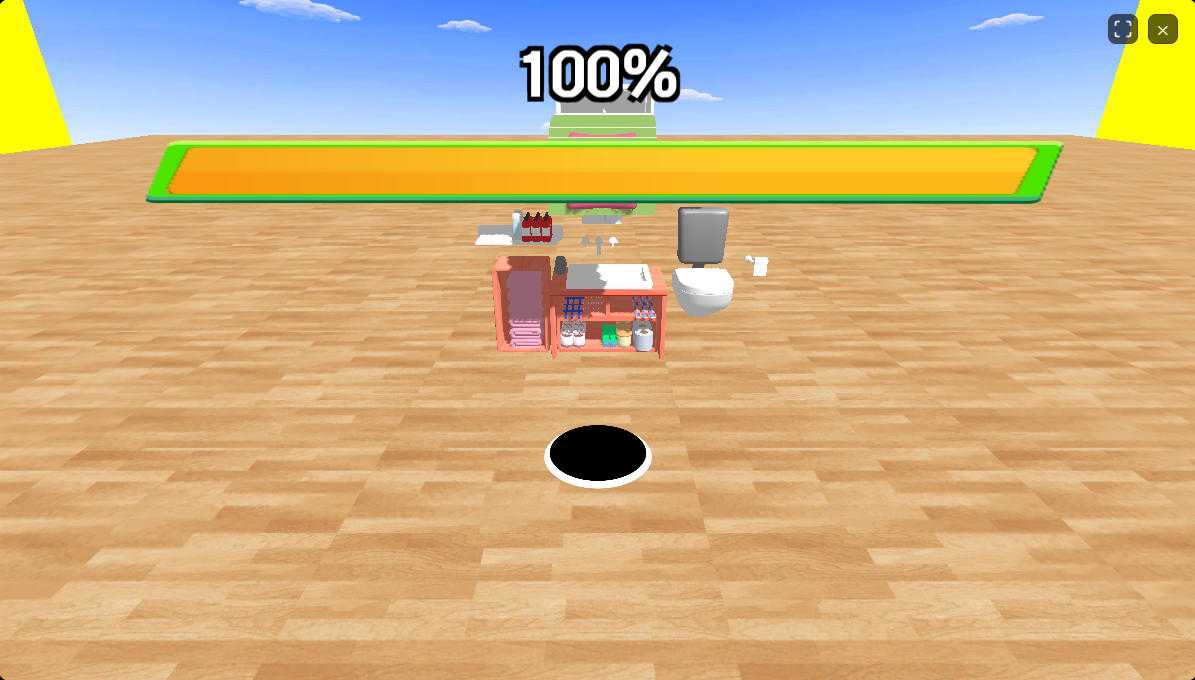
What sets Black Hole Fill 3D apart from more stressful arcade timers is its highly accommodating retry policy, which smart players can turn into a powerful meta-strategy. In typical time-attack puzzles, failing a level wipes your progress and resets the board completely. Here, the engine does something different: if the timer hits zero before you finish filling the collection zone, you can choose to instantly reload the challenge while keeping the exact expanded dimensions your black hole achieved during that failed attempt.
This mechanic opens the door for a powerful trick known as "Sizing Runs." When you encounter advanced layouts packed with massive objects and tight time limits, change your goal for the first run. Stop rushing to fill the target repository. Instead, treat your initial attempt as a dedicated growth session. Focus entirely on hunting down high-yield item clusters to expand your black hole's radius as much as possible before time runs out. When the board resets, you will start your second attempt with a massive, high-tier void that can swallow entire streets in seconds, making the final target goal incredibly easy to hit.
Adapting to Complex Layout Topologies
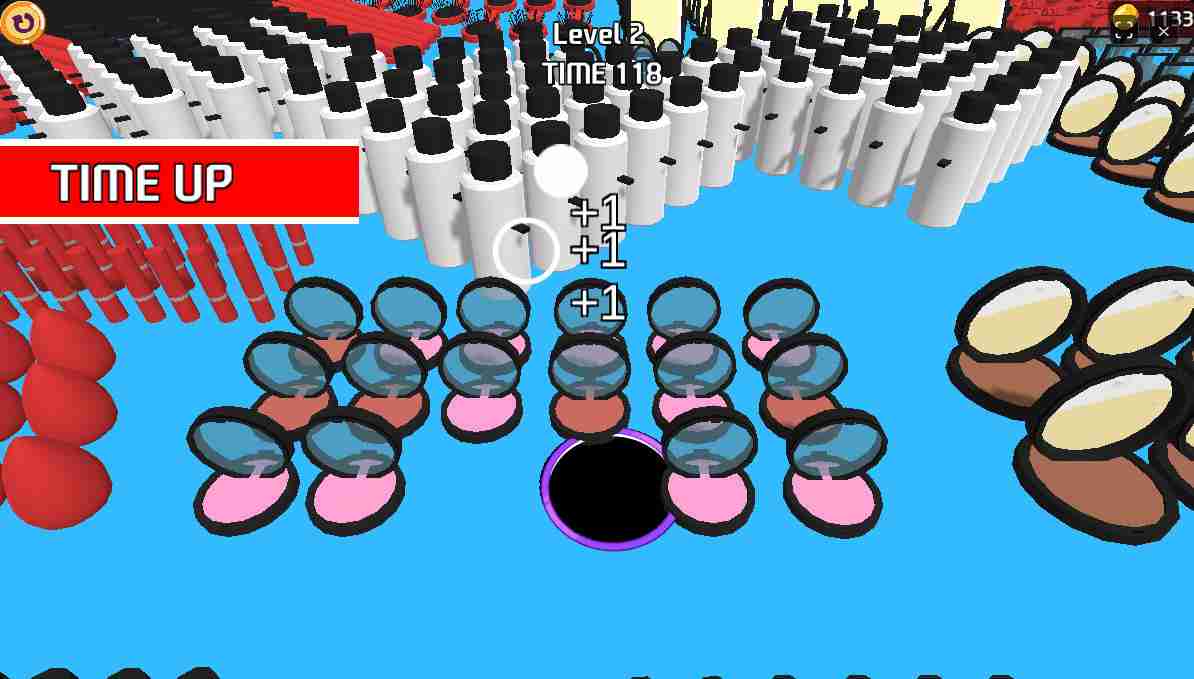
As you progress deeper into the campaign, the sandbox maps shift into tight, maze-like corridors. Early levels give you wide-open fields where you can move freely in any direction, but later stages restrict your movement using solid walls, moving barriers, and divided compartments. These tight spaces mean you can't just rely on brute size alone.
In these confined areas, growing too large too early can actually work against you if you haven't cleared out the narrow pathways first. If your event horizon expands past the width of a corridor before you slide through it, you can find yourself completely blocked from reaching unharvested rooms. To avoid this trapping situation, map out your route to clear out tight alleyways and hard-to-reach corners while your black hole is still small and agile, saving the wide-open spaces for your final high-volume growth spurt.
Video Breakdown: Perfecting the Concentric Sweep
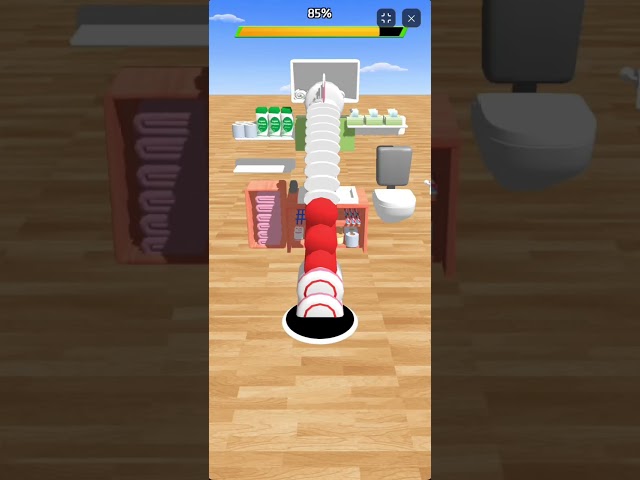
To see these clearing routes and size-building methods used in real-time, study the short gameplay breakdown provided below. Notice how the player avoids rushing toward central structures early on, choosing instead to run clean perimeter patterns to maximize early growth efficiency.
Pro Tips for High-Efficiency Level Clears
Incorporate these professional mechanical habits into your daily sessions to maintain a flawless clear record across advanced chapters:
- The Inward Spiral Route: Avoid swiping back and forth across the screen. Start from the outer edges and move inward in a steady, circular path. This cleanly scoops up small perimeter items first, giving you the size needed by the time you reach the heavy objects in the center.
- Clearing Funnel Wedges: When dealing with long, rectangular objects like pillars or planks, approach them along their narrowest edge rather than sliding in from the side. This alignment lets the physics engine drop the object straight down without it get stuck on your rim.
- Pre-position Near the Target: Your run isn't finished until the mass is deposited into the designated target area. Plan your routes so that your final, high-volume sweeps finish right next to the collection zone, cutting down on travel time when you have a full load.
- Use Kinetic Agitation: If a cluster of items gets jammed around your edge, make short, rapid jagged movements left and right. This jiggling motion resets the collision physics, allowing the jammed pieces to slide smoothly down into the void.
By keeping your movements organized, prioritizing small items early on, and using the size retention feature on tough levels, you can easily clear any layout the game throws at you. Keep your lines clean, track your growth, and watch the entire board slide effortlessly into your void!
If you experience any physics glitches, rendering bugs, or want to share ideas for upcoming item sets, feel free to send a note to our QA support team at support@puzzlechallengehub.com. We use player feedback to help balance future map updates.
Play Black Hole Fill 3D Free Online
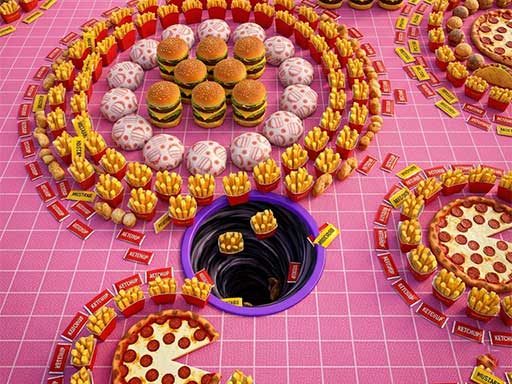
Black Hole Fill 3D
Take control of an all-consuming gravity void! Move across vibrant 3D grids, swallow physics-based items from small to large, leverage the size retention retry fail-safe, and fill up the target areas before time runs out.