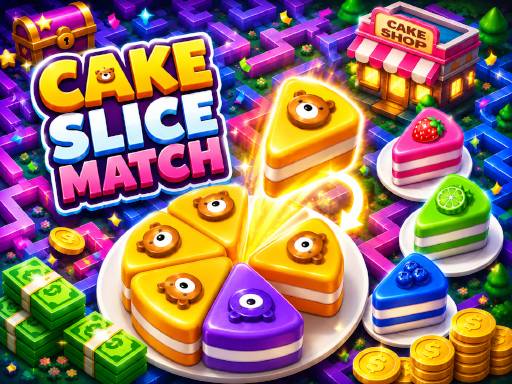
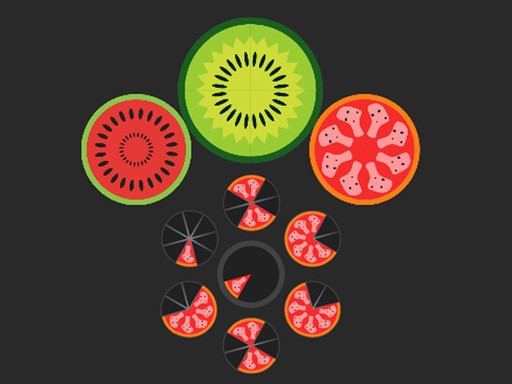
If you have a sweet tooth for puzzle games, Cake Slice Match is arguably one of the most visually appetizing and mentally stimulating titles to hit the casual gaming scene. At first glance, it might look like just another standard match-3 game plastered with dessert skins. However, beneath the delicious frosting lies a highly complex, radial-sorting mechanic. You aren't just moving pieces on a 2D grid; you are managing circular plates, predicting automated geometric jumps, and setting up cascading chain reactions.
While the first few levels allow you to lazily drop strawberry and chocolate slices wherever you please, the difficulty ramps up fiercely. Once the board fills with six-slice plates requiring multi-color balancing acts, one wrong drop will leave you entirely gridlocked. If you are constantly finding your bakery board clogged up with half-finished cakes and nowhere to put your incoming orders, you are not alone. In this massive, 1,000+ word strategy masterclass, we are going to completely deconstruct the mechanics of Cake Slice Match. We will teach you how to read the multi-color physics, flawlessly execute the "Cascade Effect," and manage your in-game economy so your power-ups are ready when disaster strikes.
Phase 1: The Core Mechanics – The Radial Jump
The gameplay loop is built around a centralized grid of empty platforms. At the bottom of the screen, the game provides you with random plates loaded with cake slices. Your job is to drag these plates onto the empty platforms.
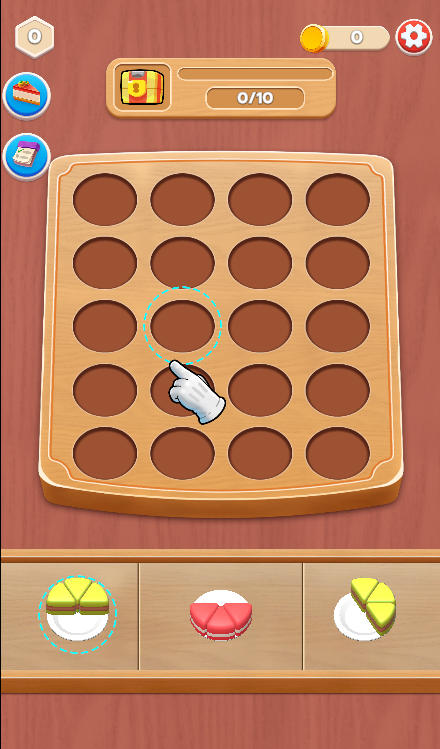
The Golden Rule of Merging: You do not manually combine slices. The game engine handles the merging automatically, but it follows strict spatial rules. When you place a plate down, any slices on that plate will instantly "jump" to adjacent plates *if* those adjacent plates contain slices of the exact same color and flavor.
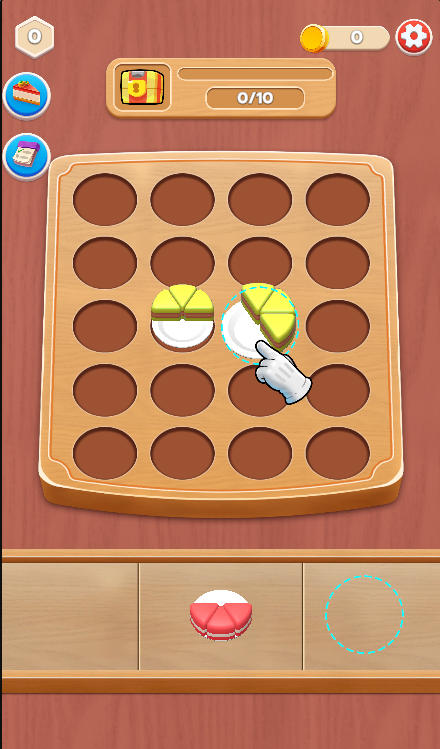
Your ultimate goal is to consolidate 6 slices of a single flavor onto one plate. Once a cake is 100% whole, it boxes itself up, rewards you with coins, and clears that platform, giving you back precious operating space. The primary danger here is placing plates blindly. If you surround a half-finished vanilla cake with fully constructed chocolate cakes, you have effectively "walled off" the vanilla. No more vanilla slices can jump to it, rendering that plate a dead zone.
Phase 2: Advanced Spatial Strategy & Multi-Color Chaos
The real brain-burning aspect of Cake Slice Match begins when the game stops giving you plates with just one flavor. You will frequently be handed plates that are split: three slices of matcha, two of blueberry, and one of red velvet.
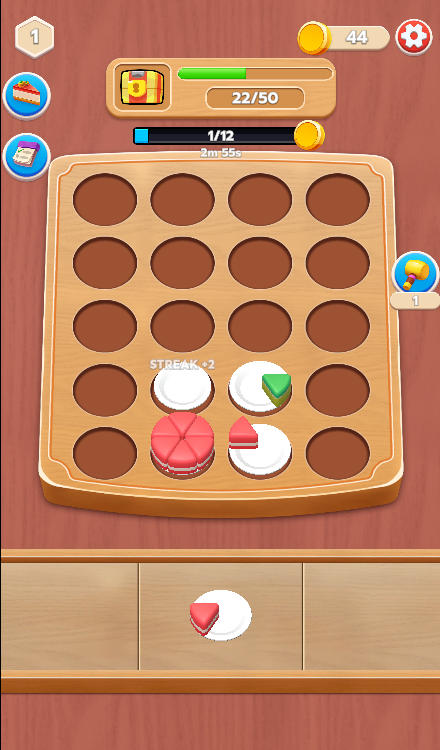
When you place a multi-colored plate next to several other half-finished cakes, the game resolves the merges in a specific sequence. It pulls pieces based on proximity and available space. If you place a plate containing chocolate and strawberry next to a plate that needs exactly one strawberry to finish, the strawberry slice will jump, completing the cake. That completed cake vanishes, leaving an empty spot! Now, the remaining chocolate slices on your original plate are free to jump to a *different* adjacent chocolate plate. Master players visualize these chain reactions before they drop a plate. They use multi-colored plates not as clutter, but as bridges to trigger two or three completions in a single move.
The Isolation Trap: Never put a multi-colored plate in a corner unless you are absolutely sure one of the colors will jump immediately. If you drop a plate with three different flavors into a corner slot, it becomes incredibly difficult to clear because you limit the number of adjacent tiles it can interact with. Keep your messy plates in the center of the board where they have 360 degrees of connection potential.
Phase 3: The Baker's Arsenal – Mastering Power-Ups
No matter how flawlessly you plan your radial jumps, the RNG (Random Number Generation) of the incoming plates will occasionally betray you. You will inevitably find yourself with a board holding zero open platforms and a queue of unusable plates. This is where your power-ups become your "get out of jail free" cards. However, they cost hard-earned coins, so timing is everything.
1. The Hammer (The Precision Strike)
The Hammer allows you to select any single plate on your board and completely smash it, clearing the space immediately.
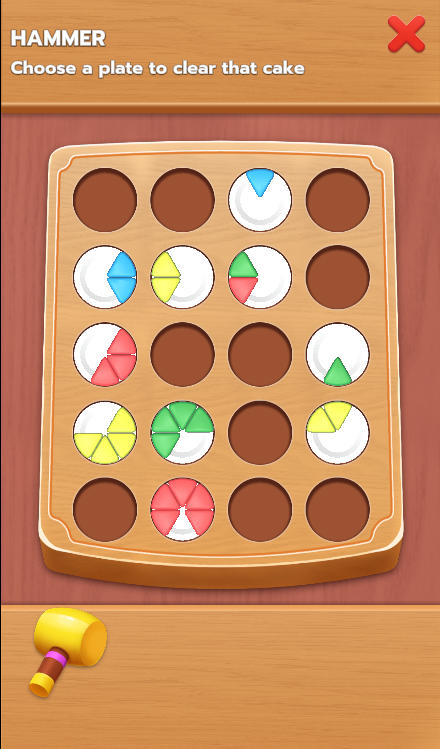
Pro Strategy: Do not waste the Hammer on plates that are almost finished. Use the Hammer exclusively on "Frankenstein Plates"—the plates that have been left behind after bad chain reactions, containing 1 slice of 4 different, unmatchable colors. Smashing a useless plate restores flow to the entire board.
2. Fill Up (The Clutch Completion)
The Fill Up tool is incredibly satisfying. You select any partially completed cake on the board, and the game automatically conjures the missing slices out of thin air, completing the cake and clearing the plate.
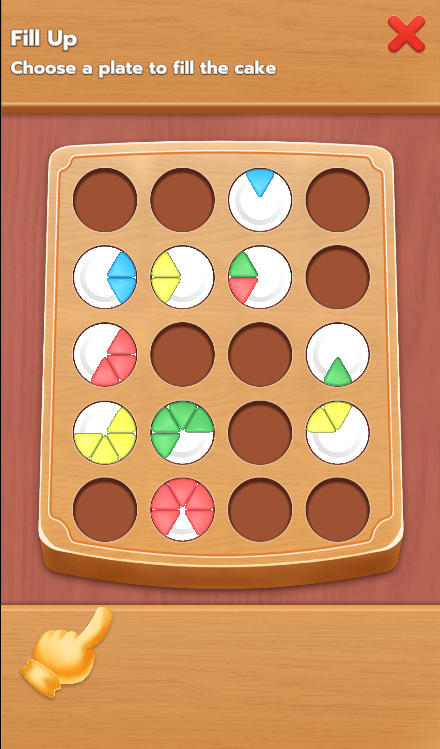
Pro Strategy: Use this dynamically. If you have a plate with 5/6 chocolate slices right in the middle of your board, but the game refuses to spawn chocolate in your queue, use the Fill Up. It secures you completion coins and opens a vital central hub for future placement.
3. Refresh (The Mulligan)
Sometimes the board is fine, but the queue at the bottom is garbage. The Refresh tool completely cycles out the currently generated plates at the bottom of the screen for brand new ones.
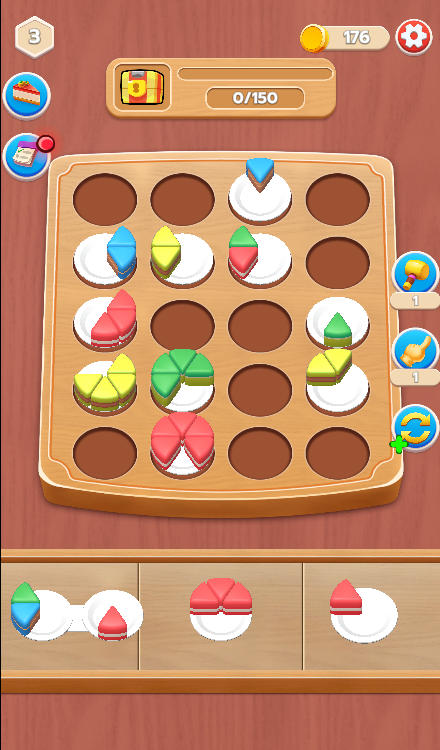
Pro Strategy: This is your cheapest and most spammable power-up. If you have open spots on your board but placing the current queue items would cause gridlock, do not force it. Hit Refresh. Patience and a good queue roll will always beat forcing a bad plate onto the board.
Gameplay Walkthrough: Watch the Master Baker
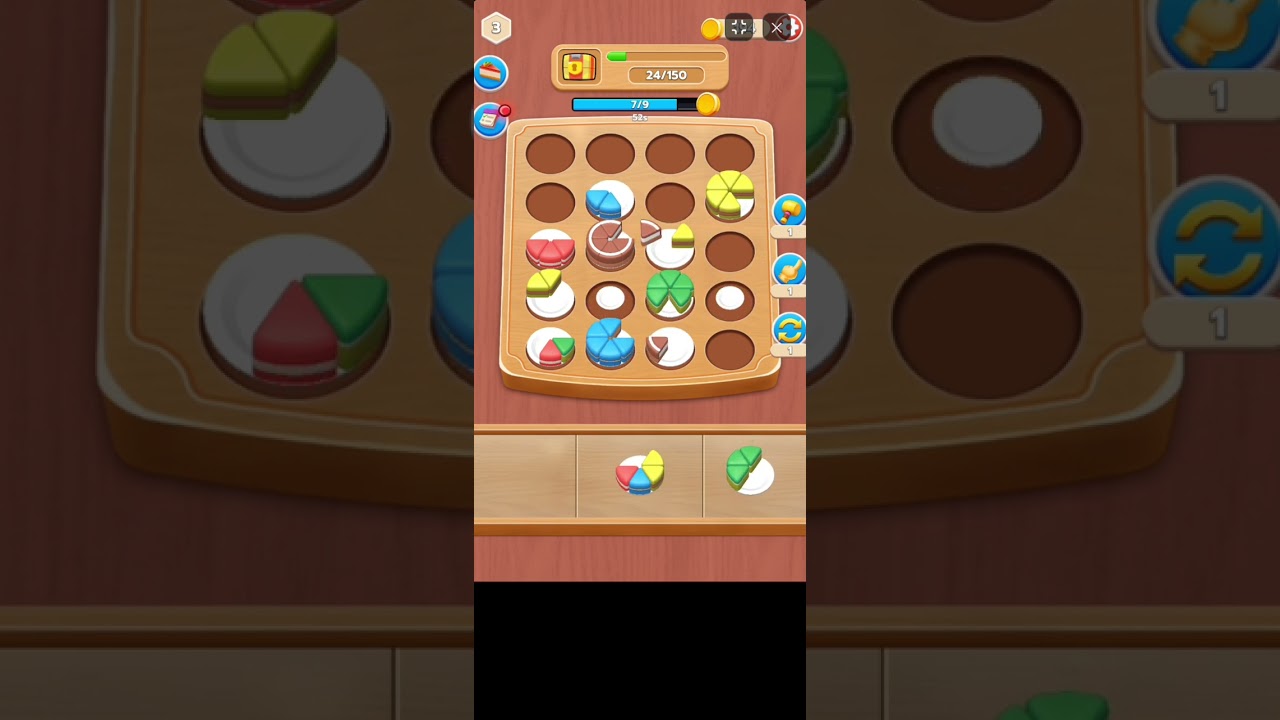
To truly grasp how adjacent jumping and the Cascade Effect function in real-time, check out the gameplay footage below. Notice how the player deliberately places split-flavor plates between two specific targets to trigger dual-completions, and how they utilize the Refresh button the moment the queue looks unfavorable.
Phase 4: The Meta-Game and Economy Management
Cake Slice Match is highly rewarding outside of the core puzzle grid. Every time you complete a unique cake type for the first time, it gets added to your Bakery Encyclopedia. This isn't just a trophy room; unlocking new entries often provides a burst of coins to fuel your power-up usage.
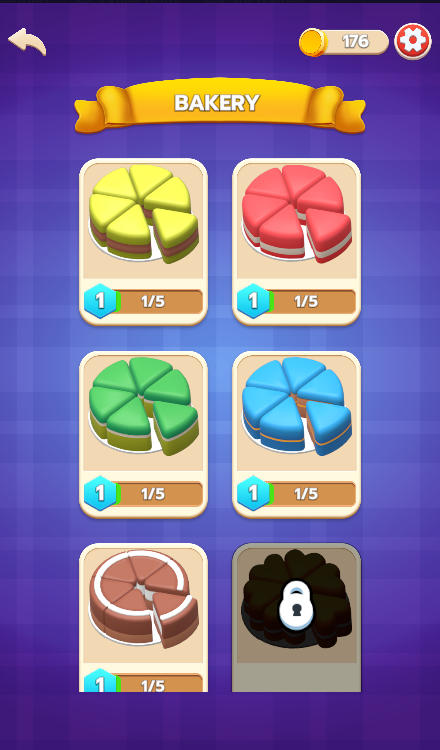
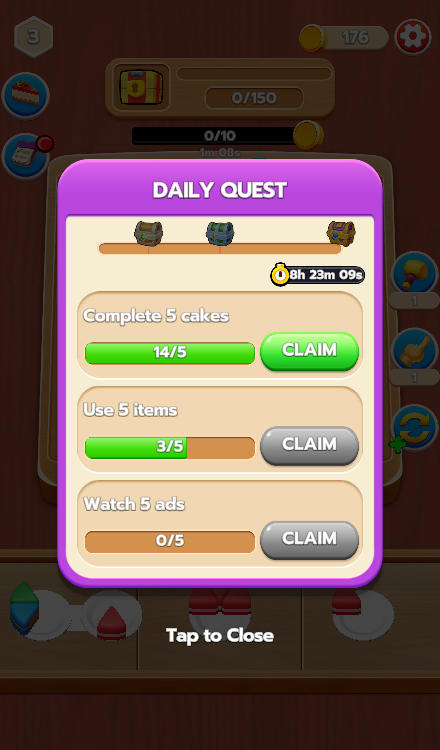
To survive the later levels without hitting a hard paywall, you must religiously engage with the daily meta-game:
- Daily Quests: These are straightforward objectives (e.g., "Complete 5 Strawberry Cakes") that funnel a steady stream of coins into your bank. Always check your quests before playing so you know which flavors to prioritize.
- Daily Gifts (7-Day Login): The rewards scale exponentially. Logging in consecutively ensures that by day 7, you receive massive coin bundles and free power-ups. Do not break your streak!
- Lucky Spin: The roulette wheel is a fantastic way to bypass the standard coin economy. It offers a chance at instant, free power-ups. Spin it every chance the game gives you.


Final Verdict: A Recipe for Success
Cake Slice Match successfully blends the relaxing, vibrant aesthetics of a dessert game with the ruthless spatial logic of a hardcore grid puzzler. By mastering the geometry of radial jumping, predicting the Cascade Effect with multi-colored plates, and fiercely protecting your power-up economy through daily challenges, you will transform from a casual baker into an elite puzzle tactician. Keep your center grids clear, watch your adjacent flavors, and get ready to serve up some serious high scores!