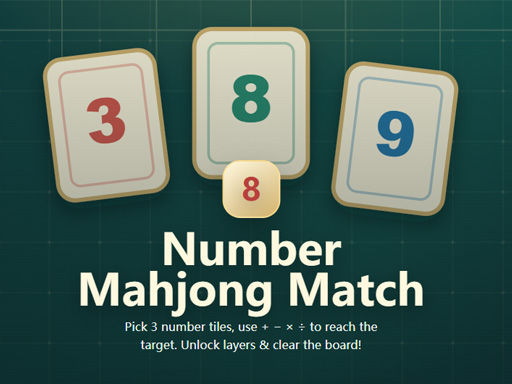
Every now and then, a casual puzzle game hits the browser market that perfectly balances entertainment with genuine cognitive enhancement. Traditional Mahjong Solitaire relies almost entirely on visual pattern recognition and basic memory tracking. But what happens when you introduce an analytical math layer into those stacked tile formations? You get Number Mahjong Match—a brilliant brain-training game that flips standard tile-matching mechanics completely on their head.
Instead of matching twin symbols, this game treats every tile as a standalone algebraic variable. To clear the board, you must think steps ahead, tracking order of operations, structural layers, and numerical targets. If you dive in expecting to randomly pick matching tiles, you will find yourself completely dead-ended by level 10. In this exhaustive player-written guide, we will break down the underlying mathematics, reveal structural clearing strategies, and unpack the subtle mechanics that separate casual clickers from math masters.
Phase 1: Understanding the Operational Mechanics
The loop of Number Mahjong Match requires a shift in how you look at a stacked mahjong configuration. Your primary reference point isn't the board itself; it's the fluctuating target number displayed at the top of the interface.
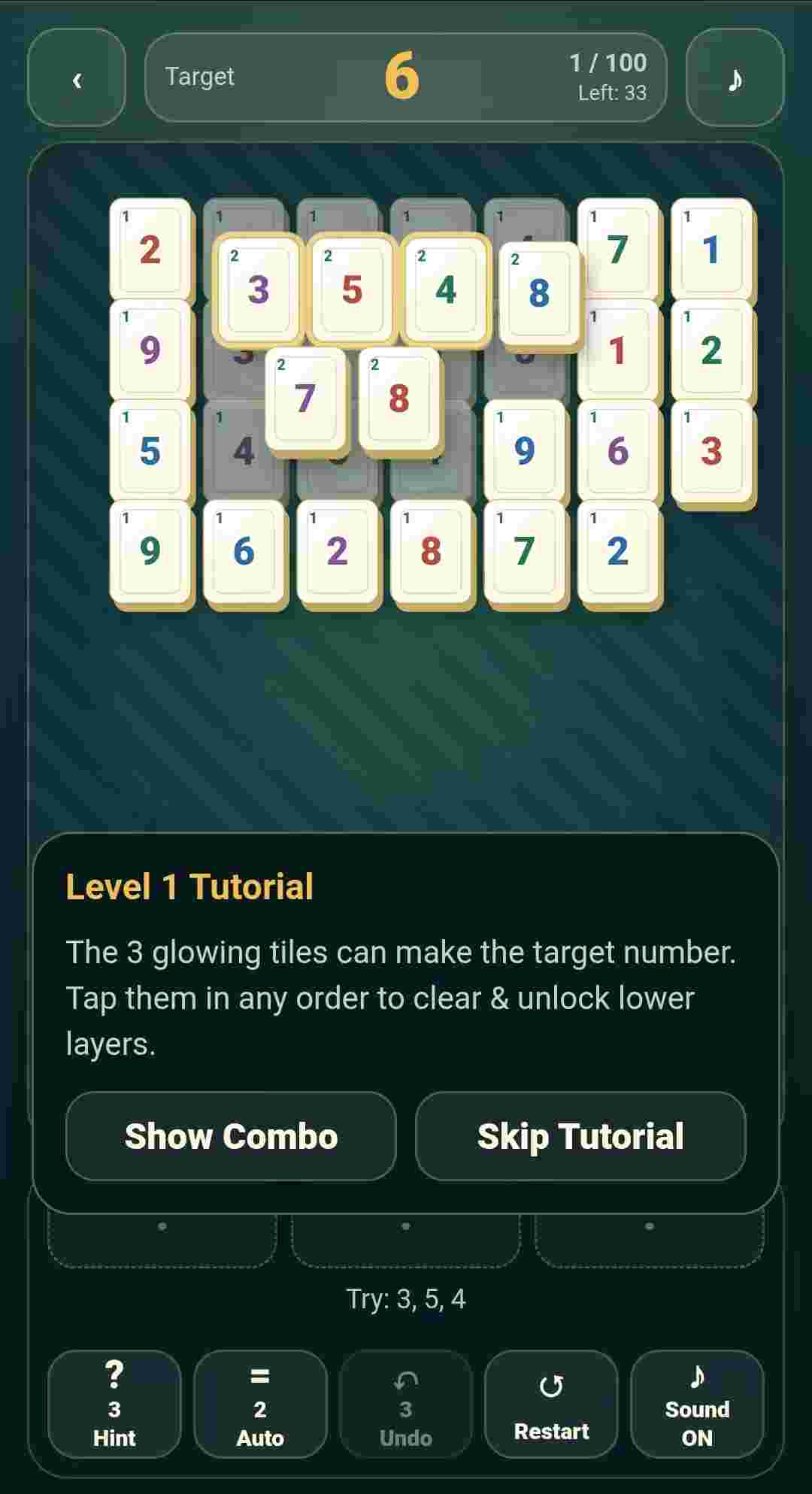
The Core Formula Syntax: To execute a legal clear, you must select exactly three unlocked tiles. Once these three numerical values sit in your active staging slots, you apply standard arithmetic operators: addition (+), subtraction (−), multiplication (×), or division (÷). The output of your chosen calculation must perfectly equate to the current target value.
For instance, if your active target value is 24, and you clear space to reveal an 8, a 2, and a 4, you can construct the formula $(8 \times 2) + 4 = 20$ (Incorrect) or pivot your logic to isolate $(8 \times 4) - 8$ if other tiles permit. The sequence in which you process values heavily impacts your computational limits. It requires constant arithmetic parsing, pushing your brain to search for factor patterns and residual values on the fly.
Phase 2: Mastering the Stack Tree (Layer Optimization)
Just like standard Solitaire Mahjong, the layout structure is 3D. Tiles are stacked on top of each other in intricate formations. A tile is considered locked if it is obscured by an overlapping layer above it, even by just a small fraction of its border.
The Dependency Tree Trajectory: Beginners often make the catastrophic error of picking easy, visible combinations around the external perimeter of the layout. While this feels productive, it leaves the dense, tall central columns completely untouched. As a rule of thumb, you should always treat your board layout as a dependency tree. Your priority must always lean toward clearing the top-most tile of a stack, even if it forces you into a more complex calculation. Clearing a single high-altitude tile can simultaneously unlock three or four structural pieces underneath, instantly broadening your mathematical options.
When dealing with large target values (such as 50 to 90), scanning the board randomly is incredibly inefficient. Instead, utilize "Multiplication Anchoring." Locate two unlocked tiles that multiply as close to the target value as humanly possible. For example, if your target is 74, look for an 8 and a 9 ($8 \times 9 = 72$). Once anchored, your target problem simplifies dynamically: you now simply need a third unlocked tile that can add 2 to close the gap. This structural filtering drastically accelerates your parsing speeds.
Phase 3: Tactical Analysis of the Tool Belt
As you progress into the deeper segments of the game's 100 layouts, the grid configurations grow progressively complex. The ratio of odd-to-even numbers on the board will occasionally shift, creating mathematical bottlenecks. When your mental math processing loop hits a wall, knowing exactly how to deploy your tactical power-ups is the difference between an organic clear and a forced restart.
1. The Hint Subsystem (Algorithmic Verification)
The Hint power-up acts as an automated calculator that scans the current pool of completely unlocked tiles. When triggered, it flashes a valid 3-tile trio capable of hitting the active target code.
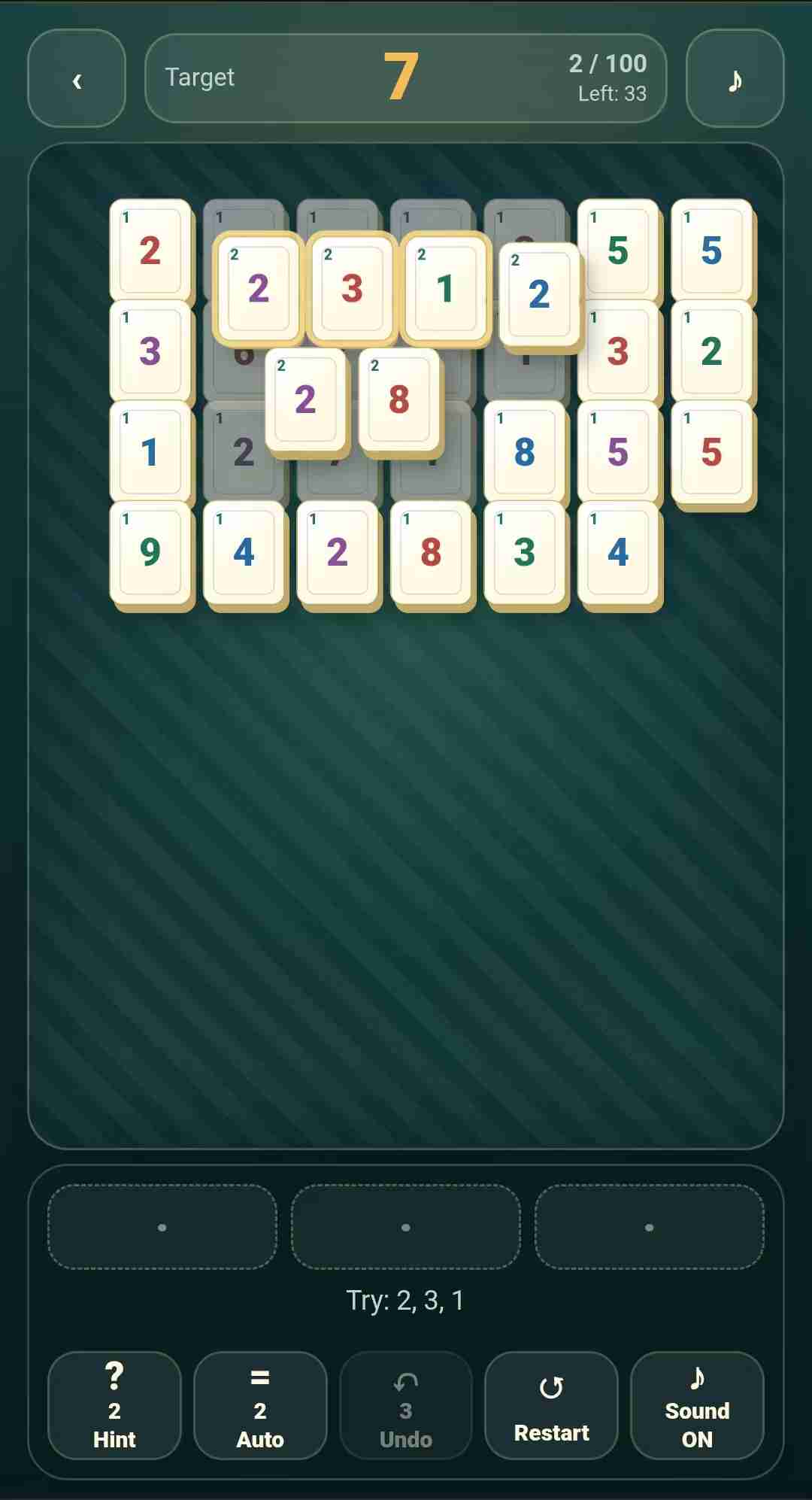
Pro Tip: Do not look at the Hint item as a lazy pass. Treat it as a tool to reveal tiles you didn't realize were unlocked. If the system highlights a tile deep in the stack, analyze why that tile was accessible—it will sharpen your physical layout parsing skills for future matches.
2. Auto-Match (Instant Board Clears)
The Auto-Match modifier bypasses the operational step entirely. It actively pairs a functional combination and sweeps them off the board automatically in real-time.
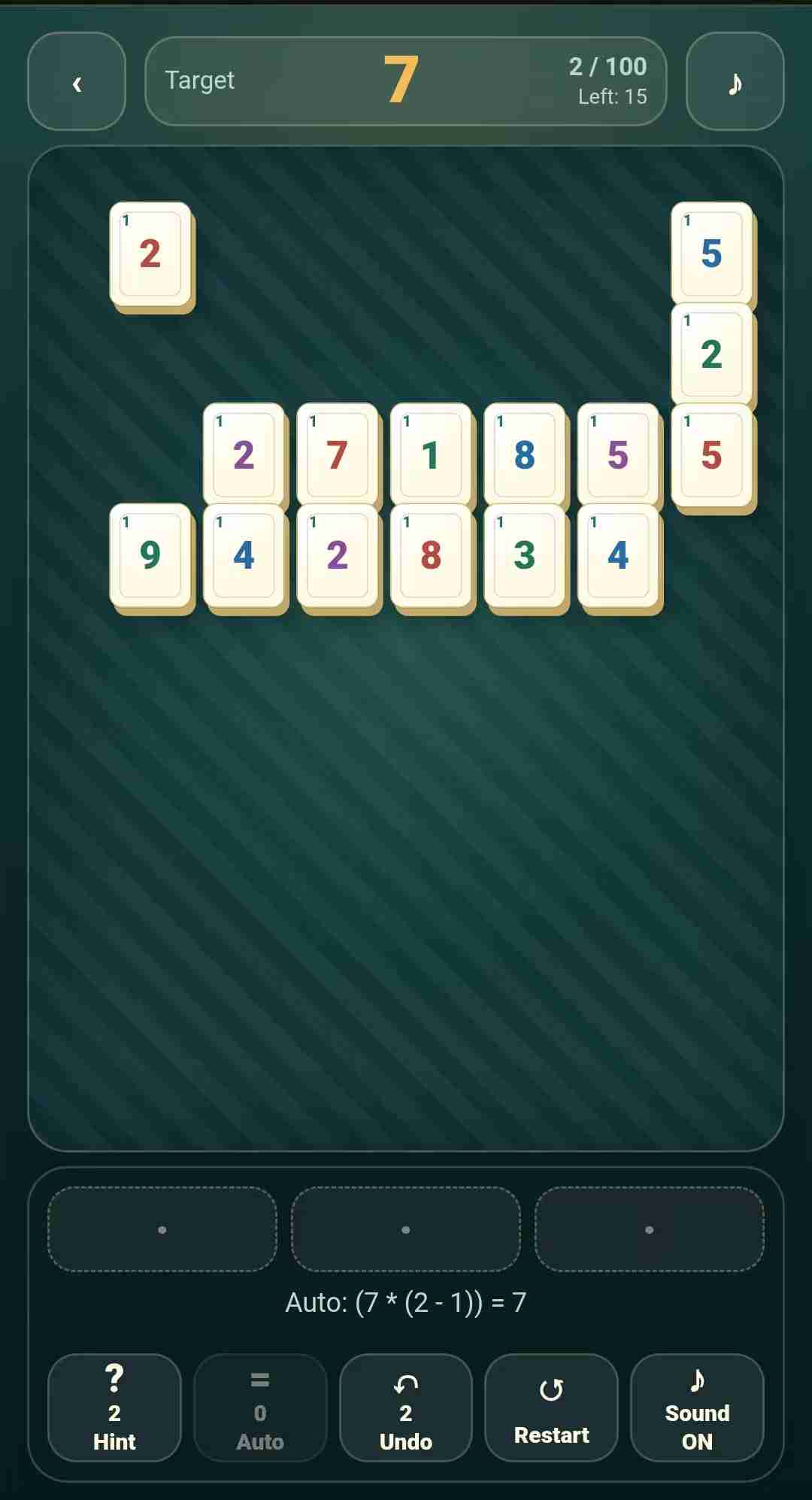
Pro Tip: Save your Auto-Match items exclusively for late-stage bottlenecks where your remaining unlocked tile variance is extremely narrow. When you only have 6 or 7 tiles exposed and no straightforward math combinations present, Auto-Match acts as the perfect structural breakthrough tool.
3. The Undo Modifier (Reverse State Tracking)
One accidental click can completely derail a beautifully planned cascade. The Undo button lets you step back one move, returning your chosen numbers to their original positions on the board state.
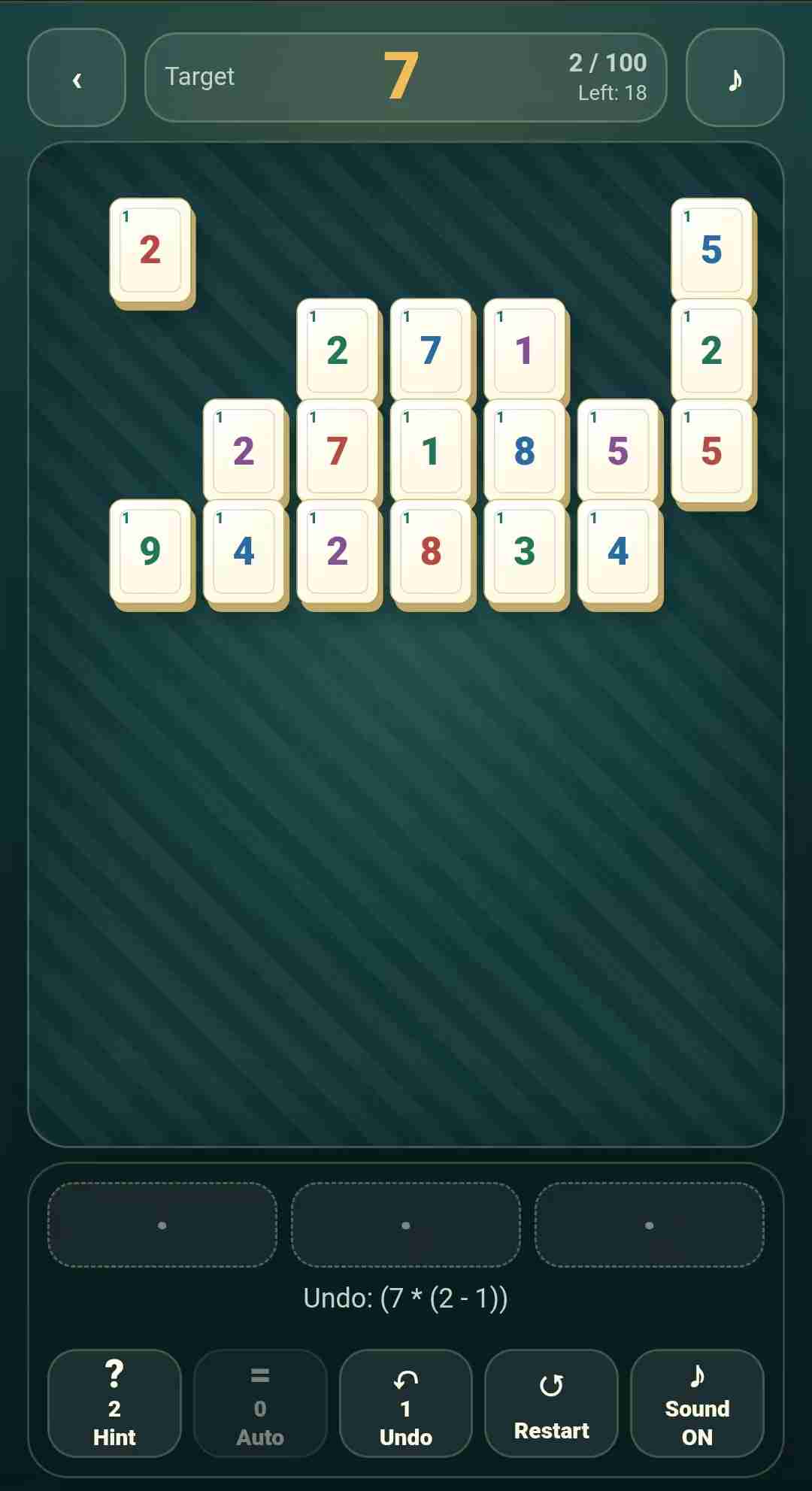
Pro Tip: Because this game tracks spatial layout logic, sometimes you select a number thinking it will unlock a specific tile beneath it, only to realize the lower tile is still blocked by a different corner. Use the Undo tool immediately to pull back and re-route your sequence without penalizing your efficiency score.
Gameplay Analysis: Step-by-Step Optimization Walkthrough
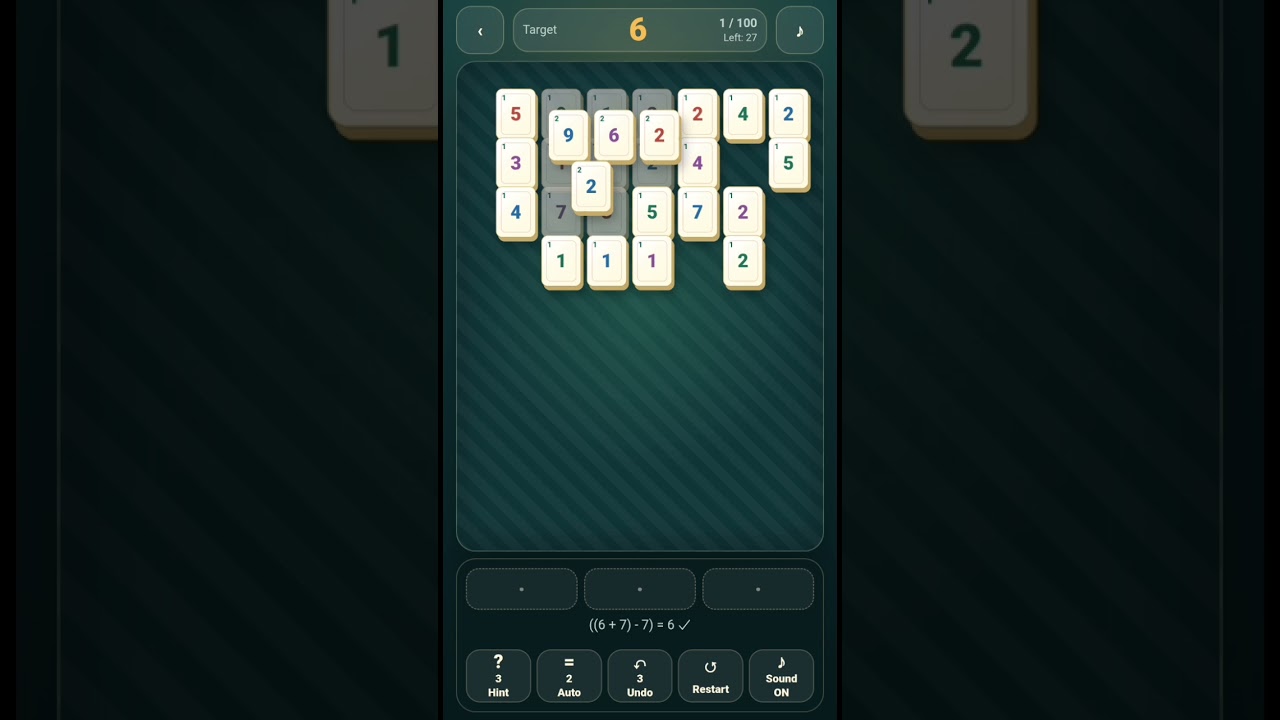
To truly grasp how fast calculation and structural clearing look in practice, watch the gameplay walkthrough below. Take note of how the player consistently maintains an internal breakdown of the target value and avoids picking low-value edge tiles in favor of breaking down high central stacks.
Comprehensive FAQ & Core Mechanics Teardown
What exactly is Number Mahjong Match?
It is an innovative educational puzzle game that overlays arithmetic formulas onto classic Mahjong Solitaire stack layouts. Instead of looking for identical tile graphics, players extract numerical tiles to dynamically solve math equations matching a specific target value.
Is Number Mahjong Match completely free to play?
Yes, the web application is built completely free to access directly inside any modern desktop, mobile, or tablet browser. There are no mandatory downloads, hidden microtransactions, or registration forms required to play.
How deep does the level progression scale?
The release version features 100 progressively designed levels. Each level increases difficulty by varying the tile stack heights, altering number distributions, and scaling up the target values to demand highly complex mental math equations.
Is the user interface optimized for smartphone displays?
Absolutely. The game engine features a fully responsive design architecture. The hitboxes for every single individual tile are cross-optimized for high-precision tap controls on iOS and Android viewports just as cleanly as mouse tracking on a desktop monitor.
What specific cognitive skills does this puzzle game improve?
By combining rapid mental calculations with spatial stack analysis, the game exercises your problem-solving speeds, numerical pattern recognition abilities, short-term memory capacity, and logical forward-planning skills.
Final Verdict: The Ultimate Mental Workout
Number Mahjong Match successfully elevates a centuries-old parlor game into a brilliant, highly addictive analytical tool. By training yourself to see rows of tiles as components of shifting math formulas, you build a cleaner approach to problem-solving. Prioritize your vertical layer stacks, utilize multiplication anchoring to lock in your targets, and manage your tactical items with precision. Turn on your browser, load up your layout, and start stretching your brain cells today!